
Category: Blog

  • Denmark Announces Plan to Restrict Speech

    Denmark Announces Plan to Restrict Speech

    In the United States, the freedom to speak openly, even when our words might be deemed offensive or brash, is a privilege many of us take for granted. While there might be social backlash for certain expressions, it is the First Amendment that prevents legal consequences from muzzling our speech.

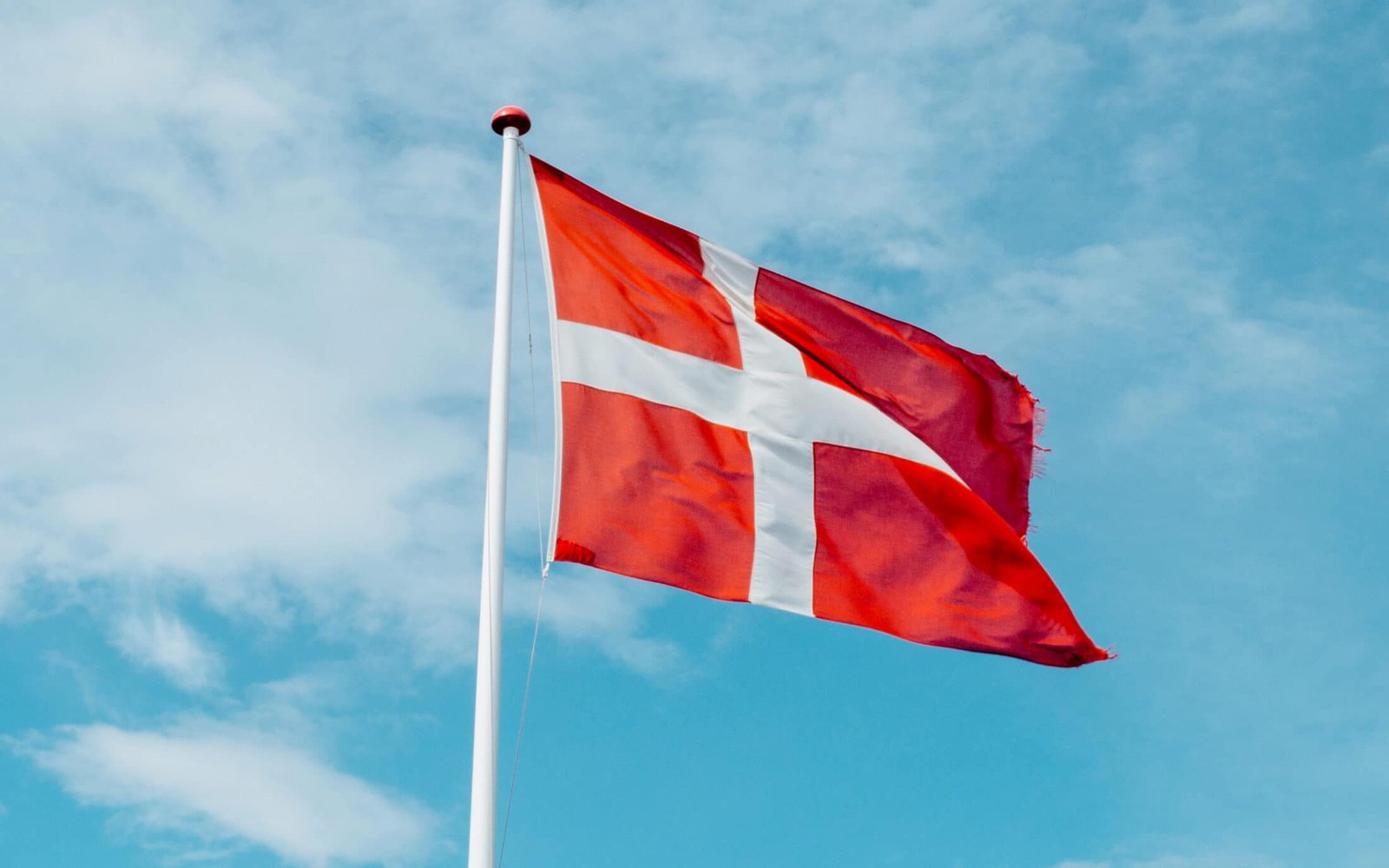
    However, a concerning trend is emerging in Europe; restrictions on freedom of speech if said speech offends Muslims. Recently, the Danish government has expressed their intent to review and potentially curtail free speech rights, especially in situations where religious or cultural sentiments are at stake. This seems primarily influenced by the grievances of the Muslim community over perceived derogatory comments or actions towards Islam.

    The Danish Patriots, a group that has caught much attention, provides a vivid example. They have publicly burned copies of the Quran in protest against what they term the “Islamification” of Europe. Such an act is deeply offensive to Muslims, who revere the Quran as the sacred word of God conveyed through the Prophet Mohammad.

    While the motivations behind such a provocative act by far-right groups might be suspect, their right to express themselves in such a manner shouldn’t be. As previously discussed, the freedom of speech is a foundational pillar for any liberal society, and this freedom extends even to those whose views we might find most repugnant.

    It becomes all the more concerning when it appears that one particular religion, Islam, is granted unique protections. Rarely do we witness European governments scrambling to ensure they don’t upset Christians, Buddhists, or adherents of other religions. This uneven treatment, whether intentional or not, affords Islam a distinct privilege that isn’t extended to other faiths.

    Of course, the rationale for such protection isn’t wholly unfounded. Europe has witnessed several devastating attacks by Islamist extremists in retaliation to what they deem blasphemous or offensive speech. This places European governments in the delicate position of balancing the fundamental rights of their citizens with concerns for public safety.

    Yet, suppressing free speech isn’t a long-term solution. Rather than fostering safety, it will simply embolden the very extremists it seeks to mollify. By ceding to their demands, we incentivize more aggressive demands in the future. Islamist extremists envision a global theocracy under their interpretation of Islam; simply refraining from overtly offensive acts won’t satiate such an expansive goal.
  • Why Freedom of Speech is Foundational

    Why Freedom of Speech is Foundational

    There have been many great defenses of freedom of speech over the years. Among my favorites is this speech by Christopher Hitchens, which I recommend everyone watch immediately even if you’ve already heard it. Once you’re done with that, though, allow me to offer something a little more focused. Hitchens, like many defenders of freedom of speech, hits some important points but doesn’t dig quite deep enough for my liking. This piece is my attempt to defend the foundational need for freedom of speech.

    What is freedom of speech?

    Before we proceed, we should probably define what we are talking about. Freedom of speech is a series of norms wherein people are given genuine liberty to express their actual thoughts to others. These norms can be broadly split into two categories.

    Cultural Freedom of Speech

    Cultural freedom of speech refers to norms, traditions, and attitudes within a culture that support freedom of speech. A culture of freedom of speech is why you would think it absurd to kick someone out of your house for disagreeing with you on whether food stamps are a good policy or not, or to fire them for voicing support for a political candidate you dislike.

    It’s the idea that we should tolerate some of the inevitable personal discomfort that comes from granting people autonomy to express themselves with the knowledge that their standing in life won’t change simply for disagreeing with someone. It is not an infinite tolerance, and to be sure, determining where to draw the line is one of the major cultural problems of our time.

    A fundamental assumption of cultural freedom of speech is that there is genuine value in living cooperatively with people that hold different values and ideas. This doesn’t mean you have to like their values or ideas; only that you don’t see differences of opinions of this sort as disqualifying someone from participating in society at large, and within reasonable bounds, you don’t see them as disqualifying someone from being someone you love, care about, and benefit from having in your life.

    Legal Freedom of Speech

    The second category is the legal implementation of freedom of speech. Cultural freedom of speech only deals in cultural norms and does not deal in the question of coercion. Legal freedom of speech does.

    The most famous example of legal freedom of speech is the 1st amendment of the US Constitution. This amendment means that the US government cannot use the force of law to prevent certain points of view from being expressed. It’s the reason a politician cannot pass a law criminalizing speech against him or his policies. It’s the reason you can’t go to jail for using the N word, no matter how rude it was to do or what it communicates about your values or beliefs. It’s the reason that any law criminalizing the burning of an American flag is null and void.

    Why Freedom of Speech is Foundationally Important?

    Human beings are fundamentally distinct from other animals. This seems to be a case of “quantity has a quality of its own”, as our nervous systems do not appear to be extremely different from that of a chimpanzee, and yet the gulf between humans and chimps when it comes to how they see and interact with the world is vaster than the gulf between a chimp and a lizard.

    Human beings primarily engage with the world through reasoning. Reasoning is the process of abstracting concrete experiences into broad categories and algorithmic structures that enable you to make inferences not grounded in direct experience. It’s how someone can figure out what a good bridge is and how to build it before creating a bridge.

    Human beings are also social animals. By nature, we live with other people and have deep emotional experiences grounded entirely in our relationship to others. It’s wired into us to interact with other people. And for good reason; the collective intelligence of several humans sharing information and learning in the areas of their respective natural inclination and strength is not merely the sum of their individual intelligences but is orders of magnitude more powerful. It’s the reason iPhones and skyscrapers exist.

    These two facts, reasoning being our primary means of interacting with the world and our social nature, are the reason freedom of speech is so important. The information sharing required in order for our collective intelligence to function demands respect for freedom of speech.

    Collective reasoning is the most powerful thing human beings have. The scientific method is its crowning jewel; in the empirical realm, it has systemized information creation and sharing so efficiently that the last 300 years make the previous 10,000 look like almost nothing in terms of human advancement.

    Closely behind the scientific method, though, is liberalism. While the scientific method normatively systematized the creation of new, useful empirical information, liberalism systematized it politically, providing the necessary legal foundation and institutions for maximizing human cooperation by restricting coercive activity, both from the government and the polity, that would otherwise inhibit it.

    This is why freedom of speech, both culturally and legally, is not just one of many important values, but the most important political value. Every other political debate in a civilized society can’t even happen without it. Human cooperation as such depends on freedom of speech to function.

    If you value living in the kind of world where humans achieve great things, problems get solved, and quality of life goes up for everyone over time, there can be no issue on which you are more steadfast than this one. A future without freedom of speech is a future in which the gulf between a human life and an animal life shrinks as our collective intelligence atrophies, problems are primarily solved with violence, and disease and decay are the norm. It is literally that important.

    Originally published on Substack.

  • It’s Time to Reclaim the Word “Liberal”

    It’s Time to Reclaim the Word “Liberal”

    In an age marked by erupting hatred and high levels of polarization, many Americans are in search of an off-ramp and a return to rationality and civility in our politics. We believe that there’s a beacon of hope still flickering from the past: liberalism.

    We write to you today as representatives of Project Liberal, a new organization that intends to reclaim not just the word “liberal,” but the values it embodies. We aim to return these ideas to the mainstream, making them as vital to our discourse as they were during the 18th century.

    For many in the United States, the word “liberal” triggers an onslaught of mixed emotions and polarized connotations. Yet, if we trace the term back to its roots, we discover a set of ideas that has continuously championed individual rights, civil liberties, democracy, free movement, and free enterprise for centuries.

    “If we trace liberalism back to its roots, we discover a set of ideas that has continuously championed individual rights, civil liberties, democracy, free movement, and free enterprise for centuries.”

    These roots still exist today, looking at the definition, “relating to or denoting a political and social philosophy that promotes individual rights, civil liberties, democracy, and free enterprise.” 

    The liberal tradition, born from the fervor of the Enlightenment, is a testament to our shared pursuit of freedom, autonomy, and respect for the individual. It dismisses coercion, instead embracing consent, cooperation, and shared understanding as the pillars of social order.

    As described by renowned economist Diedre McCloskey, “The agenda of modern liberalism, ranged against tyranny and poverty, is achieving human flourishing in the way it has always been achieved. Let my people go. Let ordinary people have a go. Stop pushing people around.”

    “The agenda of modern liberalism, ranged against tyranny and poverty, is achieving human flourishing in the way it has always been achieved. Let my people go. Let ordinary people have a go. Stop pushing people around.”

    The impact of the liberal tradition reverberates through the fabric of modern society. The strides we have made in human rights and scientific innovation owe much to the liberal ethos. It is this same ethos that fosters open discourse, encourages a rigorous exchange of ideas, and shields our freedom of expression.

    However, it seems that our society is currently experiencing a crisis of amnesia.

    The term “liberal” and its fundamental democratic principles – transparency, fairness, accountability, and the safeguarding of rights – are being sidelined in favor of populist slogans and quick fixes. We argue that it’s not the term “liberal” that needs discarding, but rather its misrepresentation that needs rectifying.

    In the Appendix to Liberalism, economist Ludvig von Mises wrote eloquently against abandoning the ideology’s name due to unfavorable sentiment. “Precisely because the word ‘liberal’ has a bad connotation…, liberalism must stick to it. One may not make the way to liberal thinking easier for anyone, for what is of importance is not that men declare themselves liberals, but that they become liberals and think and act as liberals.”

    “Precisely because the word ‘liberal’ has a bad connotation…, liberalism must stick to it. One may not make the way to liberal thinking easier for anyone, for what is of importance is not that men declare themselves liberals, but that they become liberals and think and act as liberals.”

    The word “liberal,” if reclaimed and rightly understood, can serve as a bridge among diverse groups, fostering unity in our increasingly fragmented society and building a potential movement that can stand the test of time. The fundamental principles of liberalism are antidotes to an era rife with reactionary ideas, hatred, and propaganda.

    As we look forward, reclaiming “liberal” is not just a semantic exercise. It reaffirms our commitment to the values it stands for: freedom, justice, equality, and progress. There is potency and potential of embracing the term “liberal”, with it we can conceive new solutions for modern challenges.  Project Liberal’s mission is not merely a reclamation of a word but a rejuvenation of a legacy that has championed humanity by defending every individual.

    “As we look forward, reclaiming ‘liberal’ is not just a semantic exercise. It reaffirms our commitment to the values it stands for: freedom, justice, equality, and progress.”

    We, therefore, invite you to join us in our journey to restore the word “liberal” and the principles it embodies to their rightful place in our political discourse. By doing so, we believe we can spark a movement towards a brighter, freer future, invigorating our shared commitment to creating a society where every individual thrives.

    We invite you to reclaim the word “liberal” and join us in this critical endeavor. It’s time to dispel the darkness of division and light up the path of unity, led by the beacon of true liberalism