Category: Blog

  • Religion and the Founding of the United States

    Religion and the Founding of the United States

    NOTE: This article originally appeared on the substack of Jason Pye, which can be read by clicking here. Opinions expressed are those of the author and do not necessarily reflect Project Liberal. For more articles, visit the Project Liberal blog by clicking here.


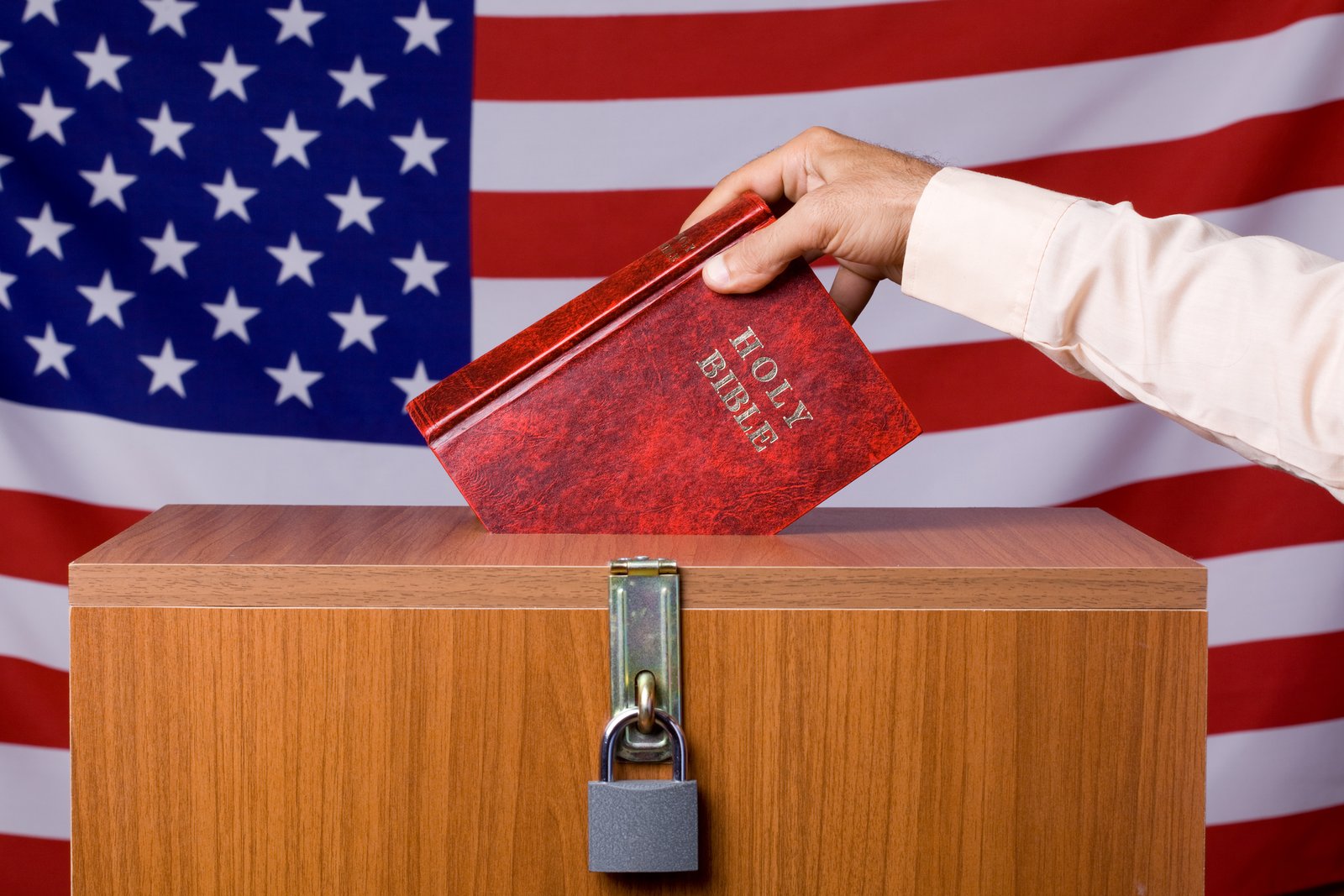
    While casually scrolling through Facebook a few days ago, I ran across an ad for the “We the People Bible.” The front cover was a design of the American flag, with the words “Holy Bible” etched between the stars. The ad stated that this version of the Bible was “designed exclusively for those who want to preserve their faith and love for America for generations to come.”

    I’ll concede up front that I’m an atheist. I’m open to being wrong, but I need tangible evidence, not, as David Hume wrote, “sophistry and illusion.” I was raised Southern Baptist in an evangelical household and attended a private Christian school for about half of my grade school years, but as I got older and read the Bible and scholarship on the Bible, I found myself with far more questions than answers.

    That was years ago. Over time, I found more answers to my questions. Although I acknowledge that no one can truly know with any certainty if there’s an intelligent being, atheism is what makes the most sense to me at this stage of my life.

    To be clear, I don’t care what you believe or what religion you practice. My girlfriend is a Christian. Most of my family and close friends are Christians. As long as you don’t hurt anyone in the process of your beliefs or use the force of government to impose your views on people, what you believe is none of my business. I’m not here to change your mind or ridicule you for what you believe. That’s not my thing. Just don’t force it on me.

    That being said, the blending of radical nationalism and evangelical Christianity is something that really bothers me because it’s based largely on false or misleading narratives about the Founding Fathers and framers of the Constitution. What’s more, Christian nationalists are actively trying to use the force of government to impose their will on Americans, many of whom practice other faiths or don’t practice any faith.

    The Constitution has two mentions of religion. The first comes in Article VI, which states, “[N]o religious Test shall ever be required as a Qualification to any Office or public Trust under the United States.” This means what it says and shouldn’t require any additional explanation. The second comes in the First Amendment. As opening of the amendment reads, “Congress shall make no law respecting an establishment of religion, or prohibiting the free exercise thereof…”

    The second reference to religion deserves more explanation. What became the First Amendment, as we know it, was James Madison’s third and fourth proposed amendments. The third proposed amendment contained the relevant language; that “Congress shall make no law establishing religion or prohibiting the free exercise thereof, nor shall the rights of Conscience be infringed.”

    Madison drew from the Virginia Declaration of Rights, authored George Mason, for what became the Bill of Rights, but especially in regard to the Free Exercise Clause. Section 16 of the Virginia Declaration of Rights states, “That religion, or the duty which we owe to our Creator, and the manner of discharging it, can be directed only by reason and conviction, not by force or violence; and therefore all men are equally entitled to the free exercise of religion, according to the dictates of conscience; and that it is the mutual duty of all to practise Christian forbearance, love, and charity toward each other.” Neither Madison’s third proposal, nor the text of the First Amendment, has any reference to a specific religion.

    The Senate would combine Madison’s third and fourth proposals and strike the “rights of conscience” clause. The House and Senate would eventually settle on a modified version of the Senate proposal that was sent to the states for ratification.

    The prevailing view in the roughly first century after the ratification of the Bill of Rights was that the rights were limited to only federal citizenship. The Supreme Court formalized that view in Barron v. Baltimore (1833). The ratification of the Fourteenth Amendment was a turning point for how we view the Bill of Rights. The relevant part of Section 1 of the Fourteenth Amendment reads, “No State shall make or enforce any law which shall abridge the privileges or immunities of citizens of the United States; nor shall any State deprive any person of life, liberty, or property, without due process of law; nor deny to any person within its jurisdiction the equal protection of the laws.”

    Reading that, one would think that the Bill of Rights immediately applied to the states. That’s not how things actually played out. The Supreme Court has gradually applied the Bill of Rights to the states. I’ll spare you the differences between incorporation through the Due Process Clause and the Privileges or Immunities Clause, except to say that the Supreme Court has routinely used the Due Process Clause to incorporate rights against the states. I’ll also add that Justice Clarence Thomas and Justice Neil Gorsuch are proponents of incorporation through the Privileges or Immunities Clause. This view is what created the concern about the right to same-sex marriage and other hot button issues being put in jeopardy post-Dobbs. While I have no doubt that Justice Thomas would side with social conservatives in reversing the right to same-sex marriage, for example, his concurrence in Dobbs referred to the process by which the Court incorporated the right, not so much the right itself.

    Back to the point. The First Amendment has gradually been incorporated against the states. The Free Exercise Clause was incorporated in Cantwell v. Connecticut (1940) while the Establishment Clause was incorporated in Everson v. Board of Education (1947). Cantwell drew on Thomas Jefferson’s 1802 letter to the Danbury Baptist Association, in which Jefferson, who was serving as president at the time, wrote, “Believing with you that religion is a matter which lies solely between Man & his God, that he owes account to none other for his faith or his worship, that the legitimate powers of government reach actions only, & not opinions, I contemplate with sovereign reverence that act of the whole American people which declared that their legislature should ‘make no law respecting an establishment of religion, or prohibiting the free exercise thereof,’ thus building a wall of separation between Church & State.”

    Some dispute that the First Amendment was meant to put a wall between church and the federal government, but the language of First Amendment—really, the Constitution as a whole when one takes the Religious Tests Clause into account—clearly signify that was the intent. Those who reject this interpretation also point out that Jefferson was in France when the Bill of Rights was proposed and debated. Although it’s true that Jefferson was a minister to France when the Bill of Rights was working its way through Congress, Jefferson wrote the Virginia Declaration of Religious Freedom, which was carried in the Virginia General Assembly by Jefferson’s top lieutenant, Madison, who wrote what became the First Amendment. As Madison wrote, “The religion then of every man must be left to the conviction and conscience of every man, and it is the right of every man to exercise it as these may dictate. This right is in its nature an unalienable right.”

    Now, was there a Christian influence on the Founding Fathers? I’d be remiss if I said there wasn’t. Clearly, virtually every Founding Father respected Christianity. There’s at least one notable exception in Thomas Paine, who outright rejected Christianity, Judaism, and Islam in The Age of Reason. Paine seemed to have a particular contempt for Christianity. He went to great lengths long before modern biblical scholarship, archeology, and access to centuries-old manuscripts to call Christianity a “fable.” That being said, Paine suggests that a man named Jesus Christ existed, as the historical record shows us, and he wasn’t an atheist.

    The influence of Jefferson and Madison are quite notable considering that they were deists or theistic rationalists. Like Paine, Jefferson wasn’t a believer in Christianity. He edited his own version of the Bible—The Life and Morals of Jesus of Nazareth—that excluded miracles and the resurrection. One might say that Jefferson highly regarded Jesus as a moral teacher. As Jefferson wrote in 1803, “I am a Christian, in the only sense in which he wished any one to be; sincerely attached to his doctrines, in preference to all others; ascribing to himself every human excellence, & believing he never claimed any other.” He wasn’t comfortable talking about his views publicly “because it would countenance the presumption of those who have endeavored to draw them before that tribunal, and to seduce public opinion to erect itself into that Inquisition over the rights of  conscience, which the laws have so justly proscribed. it behoves every man, who values liberty of conscience for himself, to resist invasions of it in the case of others; or their case may, by change of circumstances, become his own. it behoves him too, in his own case, to give no example of concession, betraying the common right of independant opinion, by answering questions of faith, which the laws have left between god & himself.” (This is straight from the letter, so try to ignore what we would consider typos today.)

    In 1816, Jefferson was much more direct, writing, “I am a real Christian, that is to say, a disciple of the doctrines of Jesus, very different from the Platonists, who call me infidel, and themselves Christians and preachers of the gospel, while they draw all their characteristic dogmas from what it’s Author never said nor saw. they have compounded from the heathen mysteries a system beyond the comprehension of man, of which the great reformer of the vicious ethics and deism of the Jews, were he to return on earth, would not recognise one feature.” (Emphasis Jefferson’s.) There are some echoes of Paine in that statement.

    The Declaration of Independence, primarily authored by Jefferson, uses deists references for God, such as “Nature’s God” and “divine Providence.” There’s no mention of Christianity. Granted, the rough draft of the Declaration did reference the “Christian king of Great Britain” in a passage that ironically condemned the slave trade. This passage was struck from the document because of objections from southern colonies.

    Madison’s religious views are harder to pin down. He may have been a deist. He may not have. Nevertheless, he made the quest for religious freedom a part of his public life. He believed that religious freedom even bolstered faith. In an 1819 letter, Madison explained, “Whilst the number, the industry, and the morality of the priesthood & the devotion of the people have been manifestly increased by the total separation of the Church from the State.” Going back to Jefferson’s letter to the Danbury Baptists, Madison wrote what became the First Amendment. Again, the intent of the separation of church and state is clear.

    Like Madison, George Washington’s religious views aren’t clearly known. John Adams was a unitarian but seemed to have some frustration with religion, once writing, “Twenty times, in the course of my late Reading, have I been upon the point of breaking out, ‘This would be the best of all possible Worlds, if there were no Religion in it’…this World would be Something not fit to be mentioned in polite Company, I mean Hell.” Adams appears to have disliked Catholicism. In 1813, he wrote to Jefferson, “Indeed, Mr. Jefferson, what could be invented to debase the ancient Christianism which Greeks, Romans, Hebrews and Christian factions, above all the Catholics, have not fraudulently imposed upon the public?” Adams also criticized laws that the criminalized doubting or denying the divine inspiration of the Bible.

    There’s also the Treaty of Tripoli with Tripoli, signed by Adams in 1797. Article 11 of the treaty states, “As the Government of the United States of America is not, in any sense, founded on the Christian religion; as it has in itself no character of enmity against the laws, religion, or tranquility, of Mussulmen; and, as the said States never entered into any war, or act of hostility against any Mahometan nation, it is declared by the parties, that no pretext, arising from religious opinions, shall ever produce an interruption of the harmony existing between the two countries.” The language, which supposedly doesn’t appear in the Arabic version but does appear in the version ratified by the Senate and signed by Adams, may have been placed in the treaty to settle concerns about religious hostilities similar to the Crusades.

    Unquestionably, there were Christians involved in the founding. The “Great Awakening” took place roughly 30 to 40 years before the colonies declared their independence, but this revival of faith was mostly regional while the Enlightenment, reason, and liberalization gained favor. Evangelical Christianity wouldn’t hit its stride until the 19th and 20th centuries.

    Patrick Henry, John Jay, Benjamin Rush, Roger Sherman, and John Witherspoon all come to mind when thinking about devoutly Christian founders. Another founding father, Elias Boudinot, wrote a rebuttal to Paine’s Age of Reason. Boudinot called Paine “the vain and infidel author” of the book.

    Am I saying that there wasn’t a religious or even Christian influence during the founding of America? No, I’m not. What I am saying is that the founding fathers weren’t as straightforward in their religious views—particularly when it comes to Christianity—as modern evangelicals want them to be. The views of the founding fathers were diverse, nuanced, and complex. But when it comes to the Constitution is a secular document. We weren’t intended to be a Christian nationalist nation. Very clearly. The separation of church and state was intended. It’s a feature of our system.

  • Freedom Civilized: The Liberal Case Against Libertarianism

    Freedom Civilized: The Liberal Case Against Libertarianism

    NOTE: This article originally appeared on the author’s blog, which can be found by clicking here. Opinions expressed are those of the author and do not necessarily reflect those of Project Liberal. View other articles about liberalism on our blog by clicking here.


    I have written previously on the subject of my transition from libertarian to liberal and briefly on what I see as the crucial difference in perspective between the two. Here I aim to do something more comprehensive, albeit at a high level; I aim to dismantle the libertarian argument via liberal principles and offer an alternative liberal vision for politics.

    I will start by outlining what I think are good, basic descriptions of libertarianism and liberalism. Given that these are both contentious terms, I would ask the reader, if they find themselves at odds with my descriptions, to grant them to me for the sake of this piece. I am using both terms to describe real things, even if the reader would use different terminology.

    I will then attempt to build a basic meta-political foundation on liberal principles. My aim then will be to show that libertarianism is at odds with this foundation, and that the libertarian alternative is inferior to liberalism.

    “He who knows only his own side of the case, knows little of that. His reasons may be good, and no one may have been able to refute them. But if he is equally unable to refute the reasons on the opposite side; if he does not so much as know what they are, he has no ground for preferring either opinion.” – John Stuart Mill

    What is Libertarianism?

    Libertarianism, in the American sense of the term that I will be using in this piece, arose during the mid-20th century in the United States. It began as little more than liberalism, but as the meaning of the term liberal began to distort in America, many liberal writers began to use the term libertarian to describe themselves instead. In Why I Am Not a Conservative, published in 1960, Friedrich Hayek wrote:

    In the United States, where it has become almost impossible to use “liberal” in the sense in which I have used it, the term “libertarian” has been used instead. It may be the answer; but for my part I find it singularly unattractive. For my taste it carries too much the flavor of a manufactured term and of a substitute. What I should want is a word which describes the party of life, the party that favors free growth and spontaneous evolution. But I have racked my brain unsuccessfully to find a descriptive term which commends itself.

    Because of this, many ideological libertarians in America today believe that their philosophy is simply the philosophy of the original liberals rebranded with a new label. This is not so; after the coining of the term in its modern usage, American libertarianism continued to grow and mutate into its own distinct political philosophy.

    Austrian School of Economics

    The first major deviation from liberalism came in the form of the Austrian School. This school of economics emerged in the late 19th century but really flourished in the early 20th century and argues for a radical form of unregulated free-market capitalism. The most extreme versions of this school reject empiricism outright, declaring empirical knowledge of economics impossible and the attempt a form of scientism, arguing that all valid knowledge about economics can only be inferred by reasoning from self-evident first principles.

    The Austrian School gave modern libertarianism its unique focus on economics and property rights. While liberalism has always defended capitalism and property rights, going all the way back to Adam Smith, economics were never as fundamental to the liberal ethos as it is to libertarianism, nor does liberalism have a dogmatic attachment to total absense of state interference in the economy. Note how the preamble to the American Declaration of Independence doesn’t even mention property rights.

    Ayn Rand

    The other major influence that pushed libertarianism away from its liberal roots was Russian-born American philosopher Ayn Rand. While Austrian School provided the focus on economics, Ayn Rand, with her philosophy of Objectivism, introduced a moral ethos to the movement by articulating the Non-Aggression Principle:

    The basic political principle of the Objectivist ethics is: no man may initiate the use of physical force against others. No man—or group or society or government—has the right to assume the role of a criminal and initiate the use of physical compulsion against any man. Men have the right to use physical force only in retaliation and only against those who initiate its use. The ethical principle involved is simple and clear-cut: it is the difference between murder and self-defense. A holdup man seeks to gain a value, wealth, by killing his victim; the victim does not grow richer by killing a holdup man. The principle is: no man may obtain any values from others by resorting to physical force.

    While Ayn Rand had a lot more to say on many more subjects, her opinions on other topics, such as epistemology, did not have much influence on the broader libertarian movement. In adopting the radical pro-capitalist stance of the Austrian School and attaching it to an explicit ethical principle, Ayn Rand helped to further solidify the American libertarian movement, despite her personal disdain for that movement.

    Murray Rothbard

    The central intellectual figure of modern American libertarianism is Murray Rothbard. In Rothbard, the various influences of the movement up to that point finally coalesced into a coherent, consistent philosophy of politics that would form the foundation of libertarianism going forward.

    Rothbard, being an Austrian economist, shared their disdain for economic empiricism and their support for radical capitalism. His chief economic influence was the Austrian school economist Ludwig von Mises, the namesake of the paleolibertarianMises Institute, on whose leadership team he briefly served.

    He also took Rand to task with his rationalist approach; while Rand grounded the non-aggression principle in ethical egoism, Rothbard took a Kantian aproach, arguing for a non-aggression axiom1 that was self-evidently true if one accepted his a prioripremises. He also reduced all individual rights to property rights, arguing that other rights, such as the right to one’s own life and to have one’s own body unmolested by others, were simply derived from one’s ownership of oneself as a form of intrinsic property.

    The result was the birth of anarcho-capitalism, the most extreme and consistent form of libertarianism. This political philosophy argues for a complete dismantling of all coercive institutions, including government, in order for form a stateless anarchic social order. The one and only universal ethical principle of such a society is radical respect for property rights grounded in the non-aggression axiom; all other considerations are of secondary importance, and anything that violates the non-aggression axiom is considered an intolerable evil regardless of any other factors.

    We have at this intellectual juncture travelled a great distance from the likes of Adam SmithJohn Locke, and John Stuart Mill. While libertarianism of this sort has its foundational roots in liberalism, deep beneath the surface somewhere, so does communism, and neither can be credibly argued to be meaningfully liberal in the broad sense of the term despite their ideological origins, both having dispensed with core liberal ideas. We now turn our attention to the task of building a liberal foundation to politics to contrast this with.

    What is Liberalism?

    Liberalism is a political tradition that arose during the Enlightenment, a period in Western history, following the Renaissance, in which traditional attitudes and power structures were under extreme pressure and critique. In this highly active intellectual environment, people began to question the Church, the King, and the relationship between these power structures and the people more generally.

    Liberalism posits that the purpose of government is to protect the interests of the people generally rather than an aristocracy or other privileged class. As such, in contrast to monarchy or imperialism, the moral validity of a government is grounded not in the divine right of kings or simple might-makes-right, but in the consent of the governed. This is most famously and eloquently exemplified in the American Declaration of Independence:

    We hold these truths to be self-evident, that all men are created equal, that they are endowed by their Creator with certain unalienable Rights, that among these are Life, Liberty and the pursuit of Happiness.–That to secure these rights, Governments are instituted among Men, deriving their just powers from the consent of the governed, –That whenever any Form of Government becomes destructive of these ends, it is the Right of the People to alter or to abolish it, and to institute new Government, laying its foundation on such principles and organizing its powers in such form, as to them shall seem most likely to effect their Safety and Happiness.

    It is important to note that liberalism is not a dogma. There is no specific book or text that outlines “the correct liberalism”. Liberalism better describes a broad group of thinkers and ideas that share a focus on the above, but vary in the details.

    Freedom

    The central pillar of liberalism is political freedom, but before we can talk of political freedom, we must establish what we actually mean by freedom in the most general sense. To this end, I offer the following:

    Freedom is the ability of a willful being to successfully exert control over reality in order to satisfy its ends.

    A willful being is a being that has a will to do things. Will is essentially another word for intentionality; willful action is intentional action. Many animals would qualify as willful beings by this definition, but the abstract, conscious will relevant to politics is something only observed in human beings. A dog certainly has intent when it eats its dinner, but it cannot reflect on that intent, and its intentions are entirely a consequence of instinct and not influenced by abstract thought at all.

    Ends are novel states of reality that the will intends to obtain; if the end is achieved, reality is different than it was before in a way that satisfies the will. If one intends to open a closed door, the end is a state of reality in which the door is open.

    Control describes the physical interaction of the will with reality to achieve intended ends. If your intended end is an open door, control describes using your physical body to grasp the door knob and open the door. Successful exertion of control occurs when everything goes according to plan; if the door opens, and this was the intent behind willful action, we can say that the will has successfully exerted control over reality.

    Freedom As Moral Good

    “Every art and every inquiry, and similarly every action and pursuit, is thought to aim at some good; and for this reason the good has rightly been declared to be that at which all things aim.” – Aristotle

    While it may seem self-evident, it’s worthwhile to take a moment to defend the idea that freedom, as described above, is a moral good. After all, various individuals and philosophies throughout history have been anti-freedom, with arguably the most explicitly anti-freedom philosophy being that of Mussolini’s fascism:

    “The Truth Apparent, apparent to everyone’s eyes who are not blinded by dogmatism, is that men are perhaps weary of liberty. They have a surfeit of it. Liberty is no longer the virgin, chaste and severe, to be fought for … we have buried the putrid corpse of liberty … the Italian people are a race of sheep.” – Benito Mussolini

    If there is anything like an objective definition of the good for a willful being, the good is the achievement of intended ends. This is not to say that all ends are equally good, or that someone can’t be mistaken in their belief that the end they are seeking is what they really want. The only argument being made here is that, practically by definition, “a good” is something that a willful being perceives as a benefit, and that willful beings design their ends based on perceived benefit.

    It necessarily follows that freedom is good, since freedom simply describes the ability of willful beings to successfully obtain the good, whatever it may be. It would be incoherent to argue that an end is good but the ability to obtain that end is not good. This would amount to arguing that “hungry people being fed” is good, but “being able to feed hungry people” is not.

    What Constrains Freedom?

    If freedom is the ability of a willful being to successfully exert control over reality in order to satisfy its ends, absence of freedom is necessarily the lack of this ability. Whenever a willful being is not able to obtain an end that it desires, we can say that freedom is constrained. Such constraints can be roughly sorted into the following categories:

    • Constrained by internal capacity. When someone is unable to achieve an end due to limitations in their being directly. For example, lacking the cognitive ability to solve a problem or lacking the physical strength to move an object.
    • Constrained by material circumstance. When someone is unable to achieve an end due to lack of available resources. For example, being unable to power a motor vehicle due to a lack of available fuel or being unable to purchase a good or service due to insufficient funds.
    • Constrained by other people. When someone is unable to achieve an end due to interference from others. For example, being unable to enter a building due to armed guards posted at the door.

    To be very clear, none of these are mutually exclusive. Reality is complex, and in real-world situations, it is usually the case that all of the above are at play in a given situation.

    The Liberal Ethos

    Liberalism is the politics of freedom as defined above. Liberals seek to create and maintain political institutions that maximize the ability of people to achieve their desired ends. This ethos underpins all of its more concrete and specific claims, and colors all debate that occurs within the context of liberalism.

    Since people naturally seek their desired ends when they have the freedom to do so, liberalism is not focused on providing them with their ends but with ensuring they have the ability to do so. As such, liberalism is negative in the sense that its primary focus is removing constraints on freedom rather than providing positive goods. This does not mean liberalism is broadly anti-coercion; only that coercion, since it is necessarily a constraint on the freedom of some, must be justified in terms of the constraints it lifts from others. A straight-forward example would be a law against murder, which constrains the freedom of would-be murderers while granting much more freedom to the majority of mankind that prefer to remain alive.

    If we apply this ethos to the various categories of constraints on freedom, we get the following political goals:

    • Removing constraints of internal capacity. The liberal values the extension of human capacity in themselves and others, both physically and cognitively, such that they are more capable of achieving their desired ends.
    • Removing constraints of material circumstance. The liberal values helping the impoverished so that they are not blocked from participation in the benefits of civilized society and legitimately have the capacity to achieve their desired ends.
    • Removing constraints of other people. The liberal values protecting the person and property of the individual from coercive interference by other people.

    Since these categories are not mutually exclusive, and removing constraints from one person can impose constraints on another, the actual business of building a liberal social order is necessarily a complex one. This is where the focus on the institutions comes in.

    Liberal Institutions

    Freedom is a kind of utility, and liberalism is about maximizing that utility across the general population. That said, maintaining the balance of so many kinds of freedom across a large population of people is no simple ask. One is constrained not only by the limits of human intellect and knowledge to have a complete enough picture of reality to always select the most utility-maximizing option in a given situation, but by the fact that reality is in a constant state of change.

    To this end, liberalism puts a focus on building the right institutions. Properly designed institutions in good working order provide a means by which the people can ensure that government is acting in their interests, being corrected both as circumstances change and as errors are found.

    One can write entire books (and many have) on individual liberal institutions, and I don’t intend to provide a full-throated defense of all of them here. Instead, I will provide a brief description of some of the most important liberal institutions, couched in the terms described above, to show how they are implied by the base assumptions of liberalism. They are not presented in order of importance, apart from the first item, which is foundational.

    • Monopolistic Government. This is the foundation that all other government institutions are built from. By granting a government monopoly over a geographic area, one constrains the legitimate use of force to a body answerable to the people. 
    • Democracy. In order for a government to be answerable to the people, the people must be able to concretely influence the operation of government, even if indirectly through electing representatives to a legislature. Democracy is the institutionalization of this idea, providing a mechanism for exactly this. 
    • Rule of Law. Law is the codification of the constraints government imposes on the people. In a liberal society, the only valid laws are laws that impose minor constraints on the freedom of some to remove greater constraints on the freedom of others. In order for the law to be fair and just, it must be written down, clearly accessible to and understandable by everyone, and enforced equally across all classes of society.
    • Checks and Balances. While governments are intended to represent all of the people, the day to day operations of government will inevitably be conducted by a small few. In order to reduce the risk that anyone operating in government might exploit such power for their own ends at the expense of society as a whole, and to reduce the risk of a majority of society crushing the freedom of a minority via government institutions, government power should be distributed and constrained, with various branches of government providing checks against each other and balancing each other’s power.
    • Private Property. Few things constrain one’s freedom more directly than denying one’s ability to own property at all. The ability to own property and direct its use as one sees fit is foundational to a free society and a flourishing economy.
    • Contract Enforcement. In order for people to engage in meaningful social and economic activity, they must be able to make agreements with others with reasonable confidence that such agreements will be honored.

    Where Libertarianism Errs

    The cardinal sin of libertarianism, from which most of its other errors follow, is in the reduction of human freedom to mere property rights. Rather than property rights being an institution that is one of many means toward the removal of many possible constraints on human freedom, libertarianism defines freedom as property rights, and either throws out all other concerns or renders them entirely subservient to property rights, such that no end can ever trump property rights.

    This reduction of all freedom to property rights gives the libertarian an overestimated confidence in his individual ability to know what policies maximize freedom. After all, the libertarian is no longer tasked with balancing a complex set of institutions and freedoms in order to maximize a form of utility. All he has to do is take his one very simple principle and apply it consistently, and what follows is necessary and definitionally freedom.

    As a consequence, the libertarian no longer has any reason to value liberal institutions like monopolistic government, democracy, rule of law, etc. These institutions are for a practical political philosophy that understands that the world is too complex for any one person to know the right answer to everything. A dogmatic man with a simple narrative does not see a complex world, and as a consequence, has no reason to value any tools intended for dealing with complexity.

    Another unfortunate consequence is that the libertarian simply does not concern himself with any other constraint on human freedom. On a surface level, he might care that someone is critically impoverished, and even aim to help them, but he does not consider that impoverishment a constraint on freedom, and therefore, he has written off any use of coercion to solve that problem. It may be that a trivial amount of wealth, coercively taken from others, would greatly improve this man’s actual freedom by enabling him to begin the process of obtaining work and a place to live, while minimally impacting everyone else, but this line of thinking is verboten when freedom is not defined in its more important and general sense.

    A related problem for libertarianism is its naked deontological outlook. Rothbard’s non-aggression axiom is a deontological moral principle, which is to say, a moral principle one has a duty to follow and is (in the eyes of the deontologist) self-evidently true. Deontology dismisses the notion that outcomes or consequences have anything to say about morality.

    Since the good is not defined in terms of any kind of outcome apart from adherence to principle, libertarianism as a practical political philosophy is unfalsifiable. If a libertarian society were to come into being and was, by some objective measurement, worse to live in than a liberal society, this would not be seen as a refutation, because the good is not defined in terms of any particular result but in terms of adherence to a principle.

    The other problem caused by libertarian deontology is that it leaves one with a political philosophy without any grounding in deeper values. As long as one follows the non-aggression axiom, any value system is as good as any other. Want to create a racially-segregated micro-community to get the “benefits” of an ethnostate? As long as nobody is violating the non-aggression axiom, the libertarian has no basis to offer a moral critique. If racial segregation became the norm across society, with a minority race being denied access to many of the basic institutions of civilization, this would not be seen as a reduction in freedom for that minority as long as, on paper, the non-aggression axiom were followed and nobody’s property rights have been violated.

    There are also numerous practical arguments to be presented against a number of libertarian and anarcho-capitalist premises, but those are outside of the scope of this piece. The aim here was to show a foundational problem with libertarianism’s core premises. 

    Liberalism, by contrast, builds itself on a much more complete vision of human freedom, recognizes that freedom is multi-faceted and complex, understands the need for freedom to be manifested as an outcome in reality, and sees government institutions as a means to enable those outcomes in the most effective way possible. This is why liberalism has produced the wealthiest and most stable socities in human history, and libertarianism remains the pipedream of a small number of ideologues.

  • The Liberalism Scorecard

    The Liberalism Scorecard

    Our political system sucks right now.

    Right now, across the world, there’s a political realignment happening. It presents the biggest opportunity liberals have seen in half a century.

    In this moment, liberals have the opportunity to lead the conversation and form a lasting coalition that can act as bulwark against authoritarianism for a generation.

    First, let me elaborate on this “realignment…”

    You’ve seen it online. The far right and the far left are converging. There’s a growing “illiberal alliance” that’s forming across the globe. You don’t have to go far nowadays to see both the radical left and far right praising Putin, justifying terrorism, or pushing to elect Trump (for admittedly diverse reasons).

    And this is all playing out in the context of the 2024 election. Both of these fringes are lining up behind Donald Trump: a convicted felon who’s taken concrete steps to stop the peaceful transfer of power… a man who seeks to dismantle America’s liberal institutions.

    Probably the most prolific political pollster of our time, Nate Silver, recently raised the red flag about the Democrat’s weakening coalition.

    In this article, he made the case that our political identities do not fit on a straight line. He echoed F.A. Hayek’s “Why I’m Not A Conservative” essay, calling for Americans to reclaim the “liberal” label by putting it in a clear juxtaposition against socialism and conservatism.

    And he said the time to do this is right now.

    It’s important to see the big picture…

    The Republican Party is transforming. Educated voters — including many former Haley supporters and Reagan Republicans — are leaving the party in droves. With these departures, the GOP has fully transformed into a fringe group of low information authoritarian voters obsessed with revenge.

    And the Tea Party movement has totally collapsed. All remaining Tea Party politicians have embraced MAGA authoritarianism. FreedomWorks recently voted to dissolve, citing the GOP pushing them away from their values. The Libertarian Party also recently invited Trump and RFK Jr. to keynote their convention.

    And yet, liberals, those who embrace the political philosophy centered around individual rights, equality, the rule of law, democracy, and free-market economics — the philosophy that created the most prosperous, free, and powerful society in human history — find themselves divided, spread across multiple parties and political identities with little electoral power.

    Extremists continue to dominate our discourse. This has to change before time runs out.

    We cannot cede electoral politics to the extremists and authoritarians.

    Here’s why you should be hopeful: with so many abandoning their values or leaving the electoral space, there is an opening in the market for an organization like ours.

    But it’s important to understand, the growth potential is not on the right. It’s on the center, center-left. As of today, 71% of Gen Z and 75% of Millennials identify as either “liberal” or “moderate.”

    Hiddentribes.us put out a study on the coalitions that make up US politics today. If the US was a multiparty system, it would look like this. This study proved that at least 41% of the electorate strongly embrace liberal values and can be united around a pro-liberty message delivered appropriately.

    The goal of this effort is threefold:

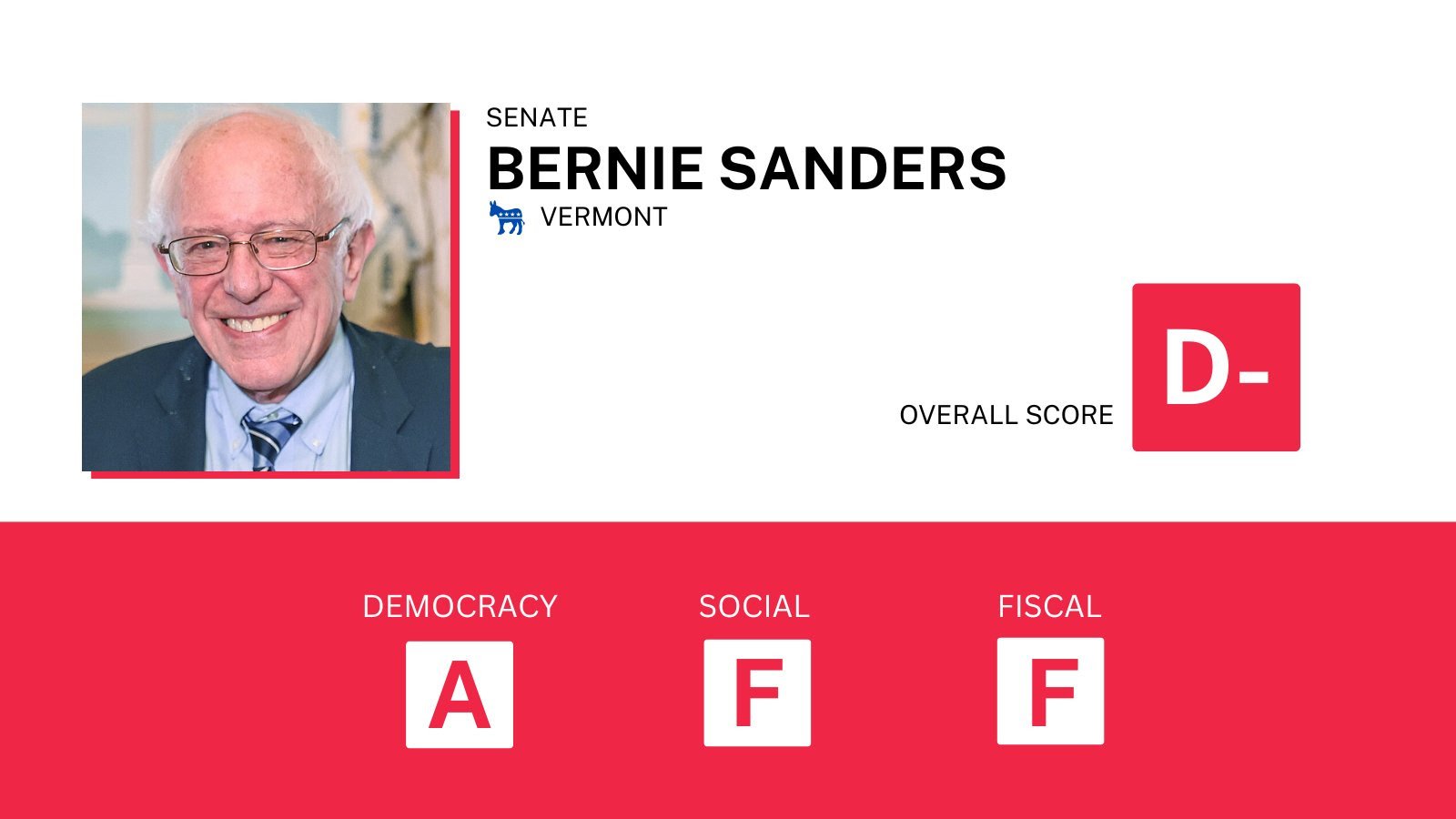
    This is more than just a simple ranking on politicians’ votes — it seeks to define their alignment with the values that built America. The way we’ll do this is by looking at more than just a candidate’s votes or policy proposals. The framework takes into account both policy and rhetoric, seeking to understand their broad commitment to liberal values.

    The final output is their liberalism score.

    This score is calculated by answering key philosophical questions that underpin liberal thought. These are broken into three axis and answer the following questions:

    Democracy

    Social

    Fiscal

    Be advised, the final framework is still under development but will be fully transparent when it’s released.

    Once the rating system is complete, we will boost and defend viable liberal candidates in primaries and general elections from authoritarian opponents regardless of party.

    Understand that we’re a mission-driven organization… that’s unique in the world of Super PACs. We do not have a billionaire backer or special interest funding us.

    However, in order to make this real, we need to quickly hire staff to begin research efforts and support our electoral work before the general election in November.

    Right now, we’re sitting at $1,500 in monthly recurring small-dollar commitments from members. It’s a good start, but we need at least $10,000 in recurring commitments before we can start hiring staff.

    Overall, we expect the entire effort to cost roughly $250,000.

    Will you chip in $10, $50, $100, or $1000 now to make this a reality?

    We recognize that this is an ambitious effort but it’s existential.

    We either build a movement to defend the values that made America great, or we risk them being lost forever.

    Remain optimistic. We can do this.

  • The Odd Allies in the Battle Against the Usurpers of Freedom

    The Odd Allies in the Battle Against the Usurpers of Freedom

    In a way, liberty and freedom is the oddest idea present in contemporary thought. Its usage seems to be shared by almost all ideologies, that can be found on our planet. Putting aside the natural use of it in the case of the libertarians and classical-liberals, even their utmost hostile opponents that is all brands of communists have their speeches filled with liberty nomenclature, relating to liberation of the lower social classes. The conservatives loudly proclaim freedom a god-given right, albeit one that has to be limited by the asterisk that “Freedom consists not in doing what we like, but in having the right to do what we ought ” (Pope John Paul II). A social democrat will enthusiastically redefine liberty as the largest possible set of positive rights, creating a worldview, where the more control a state has over your life, providing you with social welfare at its wish, the more free you are. A nationalist will consider a particular fight for a separate nation-state or its expansion a struggle for liberty with no consideration of whether the new-born entity will actually leave individual citizens greater freedom than its predecessor.

    Freedom is downtrodden by all, across the political spectrum. Its meaning altered endlessly, to fit the goals of those dreaming of seizing power, without the slightest inclination that once garnered it should be relinquished for the increase in liberty of the denizens of a particular territory. Redefined into oblivion. Its usefulness in discourse is rendered null. And yet we as classical liberals and libertarians, need to guard it with all our effort and fight the definitional war, as it is foundational to our worldview, unlike any other on the political scene. A defense process that is burdensome, but vitally urgent.

    One of the groups whose usurpation of freedom must be countered with the utmost effort are the conservatives, the right-wing, the illiberal side of the political scene. The right is spouting liberty at every turn. Despite that, the worldview it upholds is at its very core statist and tyrannical. The GOP will shamelessly tweet that “Liberty is paramount”, while the war on drugs they support, stifles the utmost basic freedom of Americans to make free choices about their body. The conservative group named “Mom’s for Liberty” will concentrate their efforts on legislating book bans, (as of now not yet advocating their burning, but the sky is the limit here). Donald Trump will speak at the Faith and Freedom Coalition Conference, even after he showed complete disregard for freedom of movement during his reign.

    The Grand Test

    While conservatives are well rehearsed on all the vocabulary, that will pull on all the right strings within the soul of a classical liberal, one must not be fooled by such a masquerade. A simple way to test the adherence to any common understanding of freedom in such a case is one proposed by John Stuart Mill almost two hundred years ago.

    “Liberty lies in the rights of that person whose views you find most odious.”

    And there comes a test for the conservative. A group so odious, few conservatives might have their hearts unfazed at their sight. The Satanists. Specifically, one satanic organization: The Satanic Temple. How do the right-wing stand in the face of such a challenge to their belief in freedom? Well, they become completely unhinged, advocating the utmost violent government crackdown, in large swaths abandoning any pretense about liberty.

    The undertaken test shows the conservative hypocrisy pertaining to the use of the First Amendment to advance their religious agenda. The Satanists driven by their non-theistic belief and grouped into a legally registered religion come into the spotlight. They demand rights, and since America is not a theocracy, they have a legal standing requiring the state, to give them the same equal access that has been for years abused by the Christian side, using every opportunity arising to pick apart the wall of separation between the church and the state. The Satanic Temple never seeks special treatment. They simply ask for equal access to privileges that are offered already to the Christian groups in a particular state.

    If there is a prayer session preceding every council meeting in a city, then they ask to also be given the possibility of giving a single invocation to their, though only metaphorical, Dark Lord.

    If a monument is raised in front of the state’s senate grounds with a creed of the Christian faith, the “Ten Commandments”, then they want to have a symbol of their faith right next to it, which happens to be an 8.5-foot figure of goat-headed Baphomet with two children at his feet and a stunning Iggy Pop torso.

    If the Christian Good News Club is granted spaces in the tax-payer-funded public schools, then TST organizes After School Satan Club for children of consenting parents that uses the exact precedent established by the Christian Nationalists.

    If Christians decide to display a nativity scene, they offer a Christmas ornament of their own, a sculpture depicting a hand extending the apple from the tree of the knowledge of good and evil, with an engraved description: “Knowledge is the greatest gift”.

    If, as in the most recent case, a Christian musician turned pastor Sean Feucht is given access to the state building for a performance involving prayer over a republican politician, then they organize a concert of the Satanic Planet in the same governmental venue.

    Those interested in further exploration of the group’s beliefs, activism, and legal battles should watch Penny Lane’s documentary titled “Hail Satan?”. The libertarian Reason Magazine rightly titled them the “unlikely defenders of the First Amendment”, as they challenge religious dominance in the public square of one faith. To the vocal anguish of the right. If liberty lies in the rights of that person whose views you find most odious, then the right does not believe in freedom at all. The calls for state persecution of the Satanists stop short of advocacy for their execution for the common good, though this also comes up in a half-joking manner. According to the right, they should be violently eliminated from the public square, their church dispersed and delegalized, and their right to free speech taken away.

    No Freedom of Speech for those I want to censor

    And this is not just some nitpicking fallacy at work. Plain disregard for constitutionally protected rights is seeped by the most prominent conservative intellectuals. The proud defenders of freedom such as the Daily Wire’s Michael Knowles and Ben Shapiro, somehow forget about it, once it has to be granted to someone they happen to hate. “Satan has no rights” proclaim the conservatives en masse. This odd statement is true only on its face, and not the intended meaning. Of course, neither Satan nor God as non-existent imaginary beings have any rights that should be extended to them. But that’s not what Michael Knowles means when he says Satan has no rights. His rants with suggestions for breaching the rights of a religion he happens to disagree with are so strong that he has to put an asterisk that “I am not suggesting that we burn the Satanists at the stake … necessarily {Knowles laughs}” What a joyous man he is!

    The mask, also nicely falls off, the once self-labelled “conservatarian”, Turning Point USA’s Charlie Kirk, who wrote in his article for Newsweek: “The libertarian values of “live and let live” are attractive to many, but there is no room for libertarianism in the face of true evil.” Well, thank you Charlie for showing us which side you are on. And it is the side of advocating for evil governmental violence on peaceful human beings.

    Tucker Carlson is also a good example of an intellectual who is undeservingly treated by some of the more paleo-leaning “libertarians” as an ally. He is not one. In his now three separate interviews with TST spokesman and co-founder Lucien Greaves, he clearly positioned himself as an absolute enemy of freedom. The three combative interrogations he conducted, as they can hardly be considered journalism, were spent by him on futile attempts to obfuscate the reality of religious freedom questions at play. In any long-form conversation, his disingenuous machinations would be exposed, in the three minutes of constant interruptions he offered the satanist, to an extent he was capable of deceiving his audience. Many of his followers likely remained with the thought that somehow the Christian privilege he advocates, and the stifling of non-Christian groups with the state Leviathan is constitutional. As he became agitated, he also hurled some classy insults such as telling Greaves to crawl back into his hole.

    Ramming Religious Freedom Down Our Throats

    What is so great, about this example is that it shows that whenever the right talks about freedom, it is to be understood the way it was absurdly redefined by John Paull II. Freedom consists not in doing what we like, but in having the right to do what we ought. Your supposedly god-given rights are subject to limits set by the Christian nationalists. You can do anything you want within the scope acceptable to conservative moralists. This is a tiny slither of all actions that libertarians would consider individuals free to pursue under the non-aggression axiom. The mutilation of the meaning of liberty is especially outrageous in the case of freedom of religion. For the right, freedom of religion does not include freedom from religion, nor any religious viewpoint far more non-traditional than Mormonism or Judaism.

    The good thing is the principle proclaimed by Mill is deeply embedded in American institutions, and little can be done by individual politicians driven by the Christian nationalist circles other than slow down the Satanists endlessly through judicial minutia. Courts and government officials do everything to make the legal costs too exorbitant for TST to pursue a particular case. This is a major problem. While the Satanists might be able to garner sufficient financial support to battle endlessly in courts, you should not be restricted in your rights just because your church or congregation cannot afford to pursue everlasting lawsuits. In many cases, such obstacles effectively take away the First Amendment rights of smaller groups. The practical reality of equal access is that it is given to Satanists only after they set aflame thousands of dollars on attorneys for stuff that should be graciously extended to them at mere request. Therefore, a libertarian cannot be deceived by the religious freedom rhetoric, that drives the attempts to pick apart the wall of separation between the church and the state.

    Religion can and should be denied as a category from public spaces. There is no more reason for time for prayer invocations to be given during council meetings than for allocating slots for members to sing songs at the beginning of the council meetings. Well, but does not that crush the artistic freedom to express oneself in whatever form one wants through music? — one could posit parroting the Christian demagogues. Denying time for prayer is as much a violation of freedom of religion, as denying time for singing, a violation of artistic freedom. It is not at all.

    Overall liberals should use this rising opportunity to advocate limiting public spaces, that could be fuel for such conflicts and displays of any religion. There is no reason to give the state any more area to meddle in, that unavoidably results in religions with all the money and power getting their way. The Supreme Court’s decision to allow religious organizations to fly their flags on a state-owned pole should not be celebrated as a win for religious freedom, as it was oddly by some libertarians, but should be seen as the dangerous opportunity for squandering religious pluralism by the pushiest extremists. The Satanic Temple immediately announced filing a request for access to the flagpole. Their of course got ignored. Can the reader guess which religion ended up having a flag displayed?

    What is more than necessary is strong budget cuts around any conflict-generating area. The flagpole was sold, the council meetings stripped of the invocation, and the plots of land with the Ten Commandments privatized. If public buildings have sufficient space for elaborate Christmas ornaments, their use of the area is likely inefficient and should be adjusted. All monuments on public grounds raised in memory of politicians or men considered great should be auctioned off to the highest bidder, whether that be their passionate admirer, who will leave them standing until they are eaten away by rust, or an Antifa member who will joyously smash them with a sledgehammer. Religious content should not be given any platform by the state, just as the political one should not. Out of all the roles usurped by the governments, that of a moral teacher must be the most incredulous.

    Beware of false allies, which come to you in liberty clothing, but inwardly they are ravening statists

    The case of the Satanists is a useful signal for many different aspects in which the right posits itself as fighter for freedom. While the right-wing for a moment seemed to be keen on free speech in the middle of the Jordan Peterson debacle or the COVID-19 vaccines debate, this is a freedom they are only willing to extend to themselves. To call this hypocrisy is to not say enough. This is a blatant insincere mockery of freedom.

    Any alliance with the conservatives in politics is a pact with the devil. Metaphorical one, unfortunately. There is no deeper principle driving their frivolous commitments to freedom, that are then abandoned at first demand of consistent application. This is a very important lesson with crucial consequences for political schemes undertaken by libertarians such as the despicable political strategy of the late Murray Rothbard, or the newer course of the Libertarian Party, which was taken over by a caucus of Mises in name only, as shown by Justin Amash in his libertarian national convention speech. The party was driven so much to the right that the ruling faction now supports candidate presidential nominee Michael Rectenwald, who had tweeted not so long ago that he was brought to tears by a Trump speech. The pact was sealed. What you‘ve sold you cannot unsell.

  • Technoliberal Estonia

    Technoliberal Estonia

    Estonia is renowned for its advanced digitalization and technological innovations. This digital prowess has led to its society often being dubbed “e-Estonia.” The hallmark of e-Estonia lies in the seamless interactions between its citizens and the government, facilitated by cutting-edge Information and Communication Technologies (ICT).

    But what does this have to do with technoliberalism? At its core, technoliberalism is a political philosophy grounded in principles of freedom, individuality, responsibility, decentralization, and self-awareness. Furthermore, it advocates for ubiquitous access to technology with minimal oversight. Central tenets of technoliberalism encompass areas like Government Building, Economics, Civil Liberties, Education, and Science and the Environment. It champions ideas such as a balanced government, decentralization, affordable education, environmental protection, appreciation of Fine Arts, and unrestricted communication technologies. Recognize the parallels?

    The Estonian model integrates a robust free market, encouragement for entrepreneurship, a Land Value Tax, accessible education and healthcare, and the efficient blending of public-private collaborations. Its hallmark is the extensive digitalization of public services, ranging from voting to tax filings and even residency applications.

    How did Estonia reach these heights? The trajectory of Estonian digitalization can be traced back to the challenges posed by its Restoration of Independence in 1991. With a primary infrastructure reflective of the Soviet era and less than half of its populace owning telephone lines, the nation had a significant digital divide to bridge. Recognizing this disparity, the first Prime Minister, Mart Laar, and his administration embarked on an ambitious journey to modernize and digitalize. This transformative period ensured that the nation transitioned from basic telephony to widespread mobile phone usage, ushering in a new digital era.

    A cornerstone of Estonia’s digital evolution was the Tiigrihüpe (Tiger Leap) initiative, launched in 1996. Championed by Toomas Hendrik Ilves, who later became the President of Estonia, and then Minister of Education, Jaak Aaviksoo, the program aimed to significantly bolster the nation’s computer and network infrastructure. A key focus was to enhance educational access, and by 1997, an impressive 97% of Estonian schools were online.Today, Estonia stands as a beacon of liberal ideologies in both its economy and political spectrum, ever-striving towards a tech-driven society. This alignment with liberal principles effortlessly translates to technoliberalism and other tech-focused philosophies that aim for a streamlined and decentralized society.

  • TED vs. Liberalism: The Suppression of Coleman Hughes

    TED vs. Liberalism: The Suppression of Coleman Hughes

    On paper, TED seems like exactly the kind of organization a liberal would want in the world. On their About page, they state that their mission is “to discover and spread ideas that spark imagination, embrace possibility and catalyze impact. Our organization is devoted to curiosity, reason, wonder and the pursuit of knowledge — without an agenda. We welcome people from every discipline and culture who seek a deeper understanding of the world and connection with others, and we invite everyone to engage with ideas and activate them in your community.”

    This mission statement has all the hallmarks of a liberal institution. Seeking deeper understanding of the world via connections between people with different ideas, backgrounds, and perspectives. Doing so without a specific agenda or axe to grind in order to arrive at the truth. A generally optimistic attitude towards all of this.

    Enter Coleman Hughes: a young black American writer and podcaster whose perspectives on race issues place him at the center-right of the current debate around such topics. He has taken stances against reparations (except for those alive that were directly affected by Jim Crow) and, after looking at the available statistics, has rejected the notion that police disproportionately do harm to black Americans. Most notably, he has taken a stance in favor of color blindness; the idea that we should strive to treat people without regard to race in our public policy and our private lives. This is the subject of his upcoming book.

    Until the recent shift in leftist ideas about race in American political discourse, color blindness was considered the standard liberal perspective on race and a fundamentally anti-racist point of view. Famously, it was the perspective of civil rights leader Martin Luther King, Jr., who said that “I have a dream that my four little children will one day live in a nation where they will not be judged by the color of their skin, but by the content of their character.” And to be sure, you will find no talk in favor of color blindness or treating people of different races equally amongst white supremacists, neo-Nazis, or other explicitly racist groups.

    Left-wing race activists, such as Ibram X. Kendi and Robin DiAngelo, have taken a very different stance in recent years. From their vantage point, color blindness is effectively turning a blind eye to injustice and racism itself and will only perpetuate systems of privilege that oppress black Americans. Race should be front and center of our understanding of the world, and the more extreme adherents to this ideology even believe that people of different races are so different that they can’t even meaningfully understand each other’s experiences. Notably, they often regard freedom of speech itself as a fundamentally white institution that exists specifically to privilege whites in American society, and generally favor both legal and cultural measures to restrict speech that contradicts their point of view.

    This view is at odds with the liberal perspective on not only race but politics and society more generally. It denies that harmonious coexistence of races is fundamentally possible, denies the validity of liberal institutions by declaring them to be toxic oppressive whiteness, and denies the superiority of the scientific method and reason as the means of understanding the world, declaring that these are white ideas.

    While this perspective is not held by the majority of the U.S. population, it is held by a significant contingent of academia as well as middle-to-upper-class white-collar America. The result is that some institutions are effectively controlled by such people, often even when those people only form a minority within the institution itself.

    And then you have TED; an institution that exists right on the verge of being controlled by this ideology, despite its surface-level agenda being, by all accounts, liberal. In fact, as the story that I am about to tell unfolds, it’s worth keeping in mind just how much confusion has been caused by placing both progressivism and liberalism on the left of the American political spectrum. We’re starting to see the inevitable break occur between these two points of view due to their irreconcilable differences, and indeed, the far left is more than happy to deny their liberalism and declare liberals the enemy.

    In keeping with the liberalism of their mission statement, TED invited Coleman Hughes to give a TED Talk on color blindness. At this juncture, I would recommend taking a break from this piece to watch the talk, as it is a great description of, and defense of, a core anti-racist liberal idea. It will also provide context for the story to follow; his talk was so professionally delivered, so clear in its meaning, and so devoid of any right-wing culture war talking points that it would be difficult to reasonably believe it represents a dangerous or racist ideology.

    Like all TED Talks, it was delivered to a live audience, but would be primarily viewed online on TED’s website and social media channels. The controversy began after the talk was delivered; an internal employee resource group for black employees called Black @ TED expressed anger at the talk. Other members of TED requested that it not be published. Ultimately, the video was only to be published if Coleman Hughes agreed to do a debate on the subject, despite no other TED speaker ever being asked to do this as a requirement for having their talk published. To his credit, Coleman Hughes agreed to the debate, and as a result, the TED Talk was indeed published.

    Once this information came to the surface, an unsurprising backlash began to occur. Notably, blogger Tim Urban, who himself has delivered the most viewed TED Talk of all time, was publicly critical of TED on X:

    Evidence that TED was intentionally suppressing the talk was also found; views for the talk on platforms not under TED’s direct control, like YouTube, were on par with other TED Talks delivered around the same time, but on TED’s own website, Coleman’s talk had about 10% of the views of other talks. While this evidence is only circumstantial, the Occam’s Razor explanation for it is intentional directing of traffic away from the video; there just is no other credible reason for there to be such a difference between platforms.

    This is the uphill battle faced by liberalism in leftist spaces. There is reason to be optimistic though; after all was said and done, TED did publish the talk, and it’s not likely they would have only a few years ago. Liberals who had just assumed their leftist friends were more or less on the same page are discovering that there are deep, irreconcilable differences of perspective at play.

    While the excesses of the culture war left are beginning to wane, liberals should stay vigilant, both of its reverberations and of the inevitable right-wing backlash already in progress. If we want a free, open, and integrated world, we have to stay the course and be wary of becoming too attached to any particular political trend or tribe. The liberal project is long term and will outlive whatever political coalitions exist today.

  • New Mexico Governor Bans Public Firearms

    New Mexico Governor Bans Public Firearms

    In the wake of a series of recent tragic shootings, including the heartbreaking death of an 11-year-old child outside a baseball stadium, New Mexico Governor Michelle Lujan Grisham took the controversial step of suspending the public’s right to carry firearms, either openly or concealed, for a period of 30 days.

    Initiated as an emergency public health order, the suspension underscores the precarious balance between empowering governmental authorities to address emergent situations and upholding rights enshrined in the Constitution. The intertwining of gun crime with public health parameters has been seen as a substantial overreach, stretching the legal understanding of what can be construed as a “public health emergency”.

    Even Governor Grisham anticipates legal repercussions stemming from this drastic move, a sentiment echoed by Albuquerque Police Chief Harold Medina, who has stated that he will not enforce the order. Medina’s stance is notable; the order is tied to a threshold for violent crime rates, with Albuquerque currently being the only city in New Mexico to currently meet the threshold.

    This contentious move by the governor has drawn ire from several prominent individuals, including former Congressman Justin Amash, who did not hold back in expressing his views:

    At the core of this debate lies the fundamental right to bear arms bestowed by the 2nd Amendment of the U.S. Constitution. Although legal interpretations have permitted certain limitations to this right, critics argue that the governor’s sweeping prohibition of public firearm possession ventures far beyond the bounds traditionally upheld by courts.

    Moreover, this order might inadvertently penalize law-abiding citizens, stripping them of their primary means of self-defense, while criminals, predisposed to flouting laws, continue to wield firearms unabated. This creates a landscape where the innocent are left vulnerable, undercutting the very essence of the right the 2nd Amendment vows to protect — a right grounded in the principle of self-preservation.

    While the pursuit of public safety, especially in times of crisis, is a noble endeavor, it is imperative to navigate this path with a measured approach that respects the Constitutional rights of Americans. It is incumbent upon leaders to find solutions to crime and violence that do not strip Americans of their ability to defend themselves.

  • What Koppelman Gets Right About Libertarianism

    What Koppelman Gets Right About Libertarianism

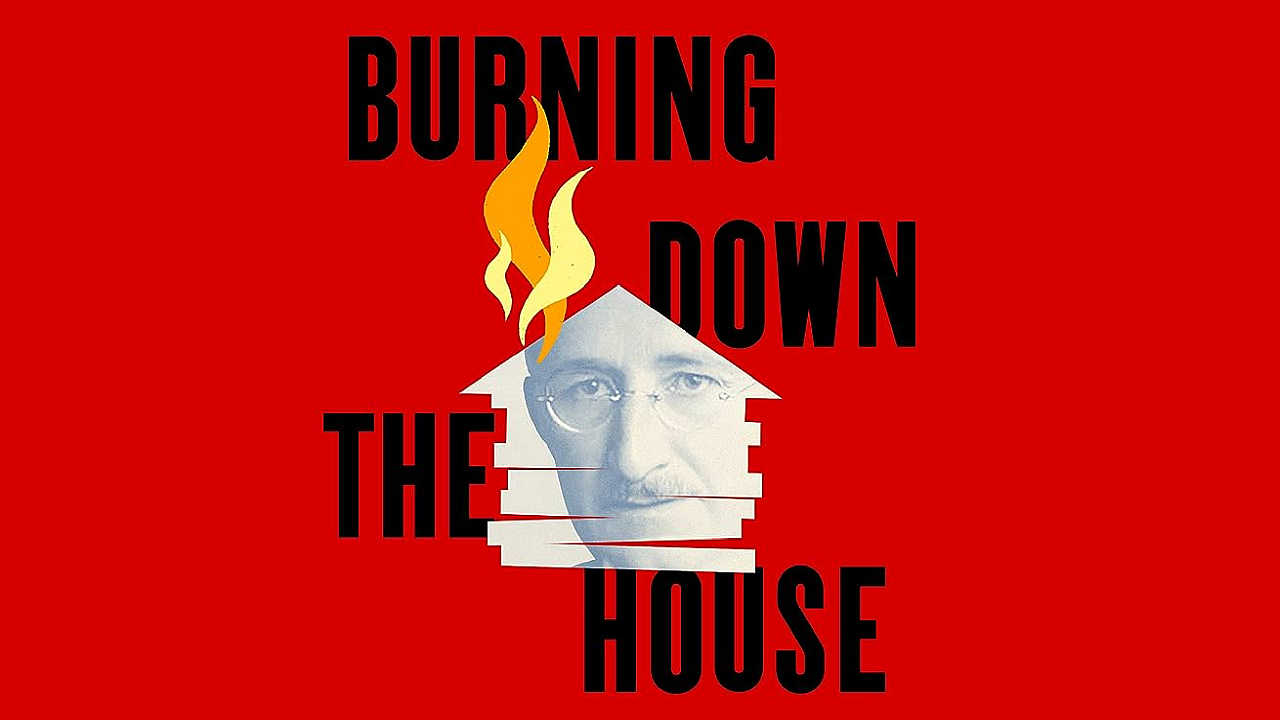
    Andrew Koppelman’s new critique of modern libertarianism is far more relevant than anyone might realize. His book, Burning Down The House: How Libertarian Philosophy Was Corrupted By Delusion And Greed, manages to adeptly parse the very difficult topic of individual liberty. What Koppelman gets right is that it shows why market liberalism is on the rise.

    In particular, it makes two main points. Firstly, it emphasizes the success of free markets. Secondly, it questions whether the protection of individual rights can inadvertently harm others. The book predominantly focuses on the latter.

    This discussion is far from irrelevant. The reconciling of these two positions, if possible, could permanently deprive the right of its arguably most crucial ally: the business community. The Democrats have already taken notice of this shift.

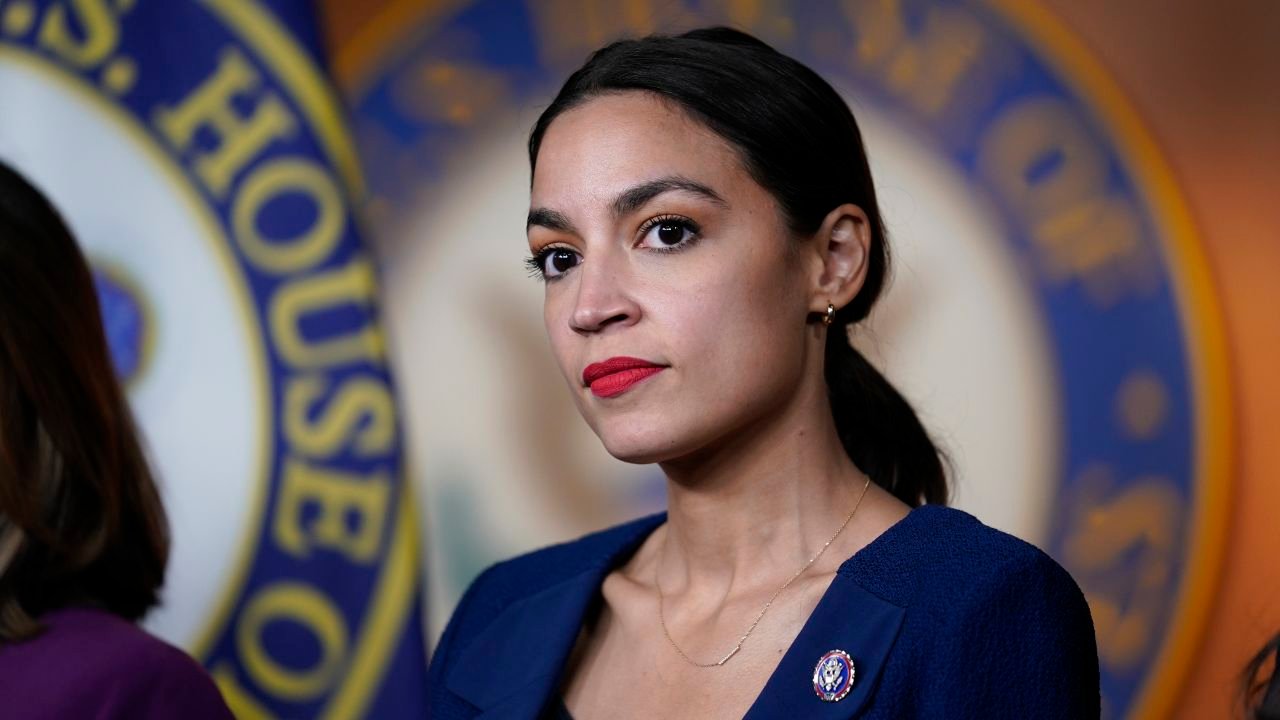
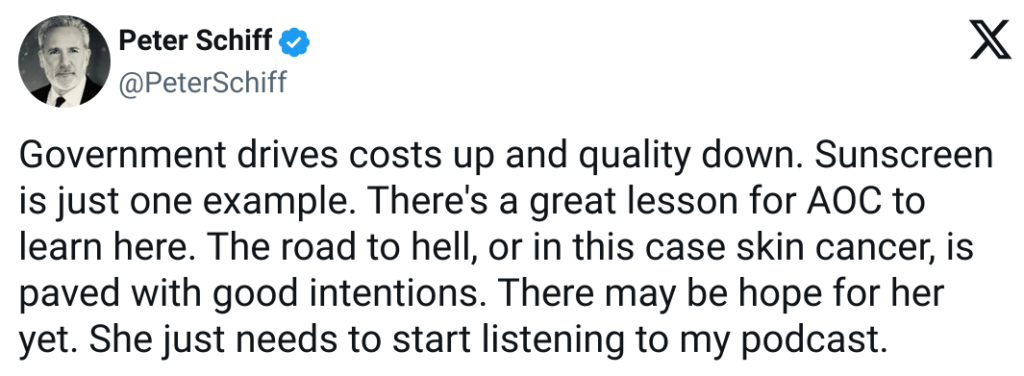
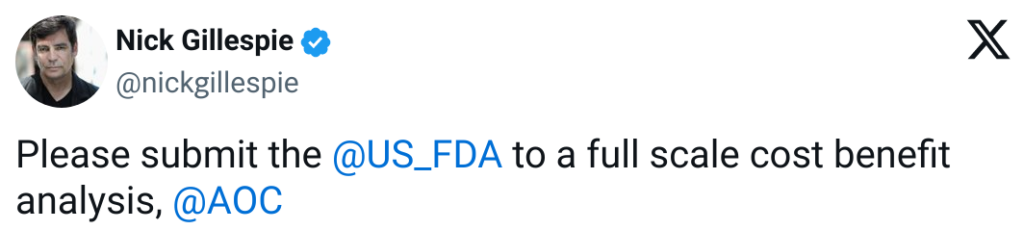
    For example, Alexandria Ocasio Cortez recently made a splash by drawing attention to the harms of over-regulating sunscreen. During an extended interview, Jared Polis also told John Stossel that he supports free markets, advocates for drug legalization, and favors eliminating Colorado’s income tax. Big business is also slowly cutting ties with a political right now dominated by culture war issues.

    Koppelman asserts that a distorted form of libertarianism has gained traction among the political right. He begins the book with the well-known tale of Gene Cranick, whose house was engulfed in flames while firefighters stood by. Cranick had consistently paid his monthly fee for privatized fire protection services but missed a payment one year. Consequently, his entire neighborhood, including the firefighters, watched his home burn to the ground.

    This story is not merely a metaphor; it actually happened. Glenn Beck and others justified the inaction of the firefighters. Policymakers, Koppelman argues, later used the same rationale during the debates over Obamacare, climate change, and other issues.

    It would be one thing for Koppelman to merely attack libertarianism by using this example. He clarifies early on, however, that better versions of libertarianism do exist.

    Libertarianism takes multiple forms. The kind that let the house burn down is a corrupted variety. Libertarians once defended free markets, and the inequalities that markets inevitably generate, without claiming that those inequalities are deserved or that people’s needs count for nothing. Free markets were valuable precisely because they offered the most promising path toward satisfying the needs of the worst off. Its commitments did not include letting houses burn.

    Koppelman contends that contemporary libertarianism is essentially a corrupted version of liberalism, advocating for people’s individual freedom to live as they choose. This stands in contrast to the populist-leaning right-libertarianism that is prevalent in today’s self-proclaimed libertarian movement. Moreover, he describes a genuine transformation in his own thinking about capitalism and he credits Friedrich Hayek with this change.

    The best thing Koppelman writes in the entire book is a single paragraph about the power of libertarianism to bridge the divide in American politics. Far from being fringe, libertarianism is both the source of, and solution to, America’s ongoing division.

    The story of the corruption of libertarianism is a sad tale with a hopeful ending. It has pitted decent Americans against one another, the left suspecting the right of blind rapaciousness, the right suspecting the left of malicious envy. The encouraging news is that they are less far apart than they think. Libertarianism is most persuasive when it shares the commitments of the political left. The disagreement is not about ends. It concerns strategy. Too many on the left fail to grasp that the original libertarian strategy has been massively vindicated. The capacity of markets to alleviate poverty has been so overwhelmingly demonstrated in recent decades that it is silly to keep denying it. Too many on the right fail to grasp that unregulated markets cannot deliver a livable world. Moderate libertarianism can bridge some of the bitterest divisions of contemporary American politics.

    Most of the book consists of an almost surgical decoupling of classical liberalism with modern radical Rothbardian libertarianism. Most chapters seem written for a non-libertarian audience. Nevertheless, this exercise in deconstruction is both refreshing and challenging.

    For example, while libertarians often talk about the maternalistic nature of the Nanny State, Koppelman considers the pros and cons of paternalism. He considers the extent to which it is necessary for the state to intervene and “protect” its citizens. Minarchist libertarians have no issue with this when it comes to law enforcement and defense, but what about consumer protection and the environment?

    Conversely, Koppelman’s narrative becomes muddled in the central section. His chapter titled “Tyranny” is a somewhat scattered and arguably superfluous exploration of the philosophies of Ayn Rand, Murray Rothbard, and Robert Nozick. His other arguments, like the “tough luck doctrine” exemplified by the house burning incident, are more than adequate to illustrate his point.

    In the book’s concluding chapter, “Moochers,” the author’s intent becomes more evident. The initial section delves into how skewed libertarianism shaped the Obamacare debate, while the latter part examines the impact of Charles Koch’s financial contributions on environmental policies.

    This chapter very much feels like the reason this book was written.

    Koppelman’s discussions on paternalism are more persuasive than his remarks on Obamacare. It appears as if he’s trying to fit a mismatched piece into the puzzle. In particular, he dismisses arguments against the individual mandate without giving them their due.

    John Stossel stood out as one of the rare libertarians who applauded specific elements of Obamacare. While I concur that many missed the law’s pro-market features, such as the introduction of exchange markets, the mandate was a consistent point of contention, and not just for libertarians.

    The alternative proposal of high-risk pools for those with pre-existing conditions was presented by the GOP even though it is basically a safety net. Alternatives like this are given scant attention in Koppelman’s book.

    He also skips over the major objection the Freedom Caucus initially had to Paul Ryan’s replacement proposal. Paul Ryan prevented any debate from occurring on the floor of the House; instead, he sought to pass a replacement proposal by making deals behind closed doors. Nancy Pelosi has continued the practice.

    It might be the case that Koppelman’s notion of acceptable paternalism could be found in the alternative healthcare proposals floating around at the time. We may never know. At least some of his indignation during this first half of the chapter seems misguided, though.

    The chapter segues into its latter part with a narrative reminiscent of the book’s opening, once again centered around a fire. This time, a young couple faces tragedy due to an exploding gas pipeline owned by Charles Koch. While Koppelman briefly concedes that accidents can occur, he predominantly highlights the incident to underscore his argument about Koch’s financial influence shaping politics for his own advantage.

    Koppelman acknowledges that Koch, as an idealist, has every right to use his wealth to shape the world according to his vision. However, he also criticizes Koch for promoting policies that conveniently support his business and financial interests.

    Koppelman may think that Koch is the apotheosis, so to speak, of corrupted libertarianism. He may also just be an example of it. If it is the former, then Koppelman’s thesis has less impact and can be easily countered. If it is the latter, however, then the diagnosis of the libertarian movement is much less grim.

    It seems like Koppelman is largely on the right track, but he is still using the language of the left to make his calculations. That is not a criticism; he is one of the only people on the political left who has been willing in recent days to give libertarianism more than a cursory glance. It is telling that when he did so, he found that it was not all bad.

    Even if Koppelman’s priorities are too limiting and short-sighted, Burning Down The House is worth a look for market liberals and libertarians alike.

  • What Trump’s 10% Tariff Would Mean for the American Wallet

    What Trump’s 10% Tariff Would Mean for the American Wallet

    In line with his protectionist history, former President Donald Trump has suggested implementing a blanket 10% tariff on all imported goods. Trump refers to this idea as a “ring around the U.S. economy”, purporting that it would boost domestic manufacturing and reduce unemployment.

    However, history and economic theory have shown that tariffs and other protectionist measures don’t necessarily foster overall economic growth. Instead, they tend to skew the economic landscape, benefiting certain sectors at the cost of others. Trump’s proposal seeks to bolster domestic manufacturing, but such protectionist policies may not yield long-term benefits.

    Introducing such a tariff would likely hinder the exchange of goods and services between the U.S. and its trading partners. While the average American might see an initial hike in the prices of many everyday items, domestic producers of these goods could experience a brief surge in job opportunities and income. Yet, they too would be subject to increased costs for goods, leading to minimal net benefits.

    This outcome can be attributed to the principle of comparative advantage. Free trade encourages specialization, allowing those most efficient at producing certain goods or services to focus on that production. A broader trade network enhances this advantage, and much of today’s economic prosperity stems from open trade across borders, leveraging the benefits of comparative advantage.

    As Trump gears up for a potential second term, he remains a strong contender for the Republican nomination. However, lingering indictments connected to the events at the U.S. Capitol on January 6th, 2021 cloud his campaign. The ramifications of these legal challenges on the election’s outcome are yet to be determined.

  • AOC Blasts FDA Sunscreen Regulations

    AOC Blasts FDA Sunscreen Regulations

    In a recent video, U.S. Representative Alexandria Ocasio-Cortez, often referred to by her initials, AOC, criticized the Food and Drug Administration for treating sunscreen as a drug. She pointed out that the FDA’s regulations have stymied progress, leading to inferior sunscreen products in the U.S. compared to those available in Europe and South Korea. She encouraged viewers to contact their congressional representatives about this concern.

    AOC is a prominent member of The Squad, a group of U.S. representatives with progressive stances that frequently place them to the left of much of the Democratic Party, and she is also a member of the Democratic Socialists of America. As a consequence, her call for less restrictive sunscreen regulation has surprised many. Several prominent conservatives and economic liberals have expressed appreciation for her stance.

    Peter Schiff Tweet

    Matthew Yglesias Tweet

    Nick Gillespie Tweet

    A week prior, she released a video in which she expressed frustration over the NYC Sanitation raid that disrupted the bustling economic activity in Corona Plaza. Many street vendors were operating without proper licenses due to the limited availability of those licenses despite the clear demand for their goods and services. Both videos highlight an unexpected alignment in policy objectives between her and economic liberals.

    These videos underscore the value of building coalitions in a representative democracy. Although we might align ourselves with specific political factions, we will often find common ground with those we might typically disagree with. It’s our hope that AOC collaborates with other members of Congress to amend the FDA’s approach to sunscreen, ensuring that all Americans can safely enjoy the outdoors, and that she is successful in enabling more small businesses and entrepreneurs to operate in New York City.