
Tag: Project Liberal

  • The Odd Allies in the Battle Against the Usurpers of Freedom

    The Odd Allies in the Battle Against the Usurpers of Freedom

    In a way, liberty and freedom is the oddest idea present in contemporary thought. Its usage seems to be shared by almost all ideologies, that can be found on our planet. Putting aside the natural use of it in the case of the libertarians and classical-liberals, even their utmost hostile opponents that is all brands of communists have their speeches filled with liberty nomenclature, relating to liberation of the lower social classes. The conservatives loudly proclaim freedom a god-given right, albeit one that has to be limited by the asterisk that “Freedom consists not in doing what we like, but in having the right to do what we ought ” (Pope John Paul II). A social democrat will enthusiastically redefine liberty as the largest possible set of positive rights, creating a worldview, where the more control a state has over your life, providing you with social welfare at its wish, the more free you are. A nationalist will consider a particular fight for a separate nation-state or its expansion a struggle for liberty with no consideration of whether the new-born entity will actually leave individual citizens greater freedom than its predecessor.

    Freedom is downtrodden by all, across the political spectrum. Its meaning altered endlessly, to fit the goals of those dreaming of seizing power, without the slightest inclination that once garnered it should be relinquished for the increase in liberty of the denizens of a particular territory. Redefined into oblivion. Its usefulness in discourse is rendered null. And yet we as classical liberals and libertarians, need to guard it with all our effort and fight the definitional war, as it is foundational to our worldview, unlike any other on the political scene. A defense process that is burdensome, but vitally urgent.

    One of the groups whose usurpation of freedom must be countered with the utmost effort are the conservatives, the right-wing, the illiberal side of the political scene. The right is spouting liberty at every turn. Despite that, the worldview it upholds is at its very core statist and tyrannical. The GOP will shamelessly tweet that “Liberty is paramount”, while the war on drugs they support, stifles the utmost basic freedom of Americans to make free choices about their body. The conservative group named “Mom’s for Liberty” will concentrate their efforts on legislating book bans, (as of now not yet advocating their burning, but the sky is the limit here). Donald Trump will speak at the Faith and Freedom Coalition Conference, even after he showed complete disregard for freedom of movement during his reign.

    The Grand Test

    While conservatives are well rehearsed on all the vocabulary, that will pull on all the right strings within the soul of a classical liberal, one must not be fooled by such a masquerade. A simple way to test the adherence to any common understanding of freedom in such a case is one proposed by John Stuart Mill almost two hundred years ago.

    “Liberty lies in the rights of that person whose views you find most odious.”

    And there comes a test for the conservative. A group so odious, few conservatives might have their hearts unfazed at their sight. The Satanists. Specifically, one satanic organization: The Satanic Temple. How do the right-wing stand in the face of such a challenge to their belief in freedom? Well, they become completely unhinged, advocating the utmost violent government crackdown, in large swaths abandoning any pretense about liberty.

    The undertaken test shows the conservative hypocrisy pertaining to the use of the First Amendment to advance their religious agenda. The Satanists driven by their non-theistic belief and grouped into a legally registered religion come into the spotlight. They demand rights, and since America is not a theocracy, they have a legal standing requiring the state, to give them the same equal access that has been for years abused by the Christian side, using every opportunity arising to pick apart the wall of separation between the church and the state. The Satanic Temple never seeks special treatment. They simply ask for equal access to privileges that are offered already to the Christian groups in a particular state.

    If there is a prayer session preceding every council meeting in a city, then they ask to also be given the possibility of giving a single invocation to their, though only metaphorical, Dark Lord.

    If a monument is raised in front of the state’s senate grounds with a creed of the Christian faith, the “Ten Commandments”, then they want to have a symbol of their faith right next to it, which happens to be an 8.5-foot figure of goat-headed Baphomet with two children at his feet and a stunning Iggy Pop torso.

    If the Christian Good News Club is granted spaces in the tax-payer-funded public schools, then TST organizes After School Satan Club for children of consenting parents that uses the exact precedent established by the Christian Nationalists.

    If Christians decide to display a nativity scene, they offer a Christmas ornament of their own, a sculpture depicting a hand extending the apple from the tree of the knowledge of good and evil, with an engraved description: “Knowledge is the greatest gift”.

    If, as in the most recent case, a Christian musician turned pastor Sean Feucht is given access to the state building for a performance involving prayer over a republican politician, then they organize a concert of the Satanic Planet in the same governmental venue.

    Those interested in further exploration of the group’s beliefs, activism, and legal battles should watch Penny Lane’s documentary titled “Hail Satan?”. The libertarian Reason Magazine rightly titled them the “unlikely defenders of the First Amendment”, as they challenge religious dominance in the public square of one faith. To the vocal anguish of the right. If liberty lies in the rights of that person whose views you find most odious, then the right does not believe in freedom at all. The calls for state persecution of the Satanists stop short of advocacy for their execution for the common good, though this also comes up in a half-joking manner. According to the right, they should be violently eliminated from the public square, their church dispersed and delegalized, and their right to free speech taken away.

    No Freedom of Speech for those I want to censor

    And this is not just some nitpicking fallacy at work. Plain disregard for constitutionally protected rights is seeped by the most prominent conservative intellectuals. The proud defenders of freedom such as the Daily Wire’s Michael Knowles and Ben Shapiro, somehow forget about it, once it has to be granted to someone they happen to hate. “Satan has no rights” proclaim the conservatives en masse. This odd statement is true only on its face, and not the intended meaning. Of course, neither Satan nor God as non-existent imaginary beings have any rights that should be extended to them. But that’s not what Michael Knowles means when he says Satan has no rights. His rants with suggestions for breaching the rights of a religion he happens to disagree with are so strong that he has to put an asterisk that “I am not suggesting that we burn the Satanists at the stake … necessarily {Knowles laughs}” What a joyous man he is!

    The mask, also nicely falls off, the once self-labelled “conservatarian”, Turning Point USA’s Charlie Kirk, who wrote in his article for Newsweek: “The libertarian values of “live and let live” are attractive to many, but there is no room for libertarianism in the face of true evil.” Well, thank you Charlie for showing us which side you are on. And it is the side of advocating for evil governmental violence on peaceful human beings.

    Tucker Carlson is also a good example of an intellectual who is undeservingly treated by some of the more paleo-leaning “libertarians” as an ally. He is not one. In his now three separate interviews with TST spokesman and co-founder Lucien Greaves, he clearly positioned himself as an absolute enemy of freedom. The three combative interrogations he conducted, as they can hardly be considered journalism, were spent by him on futile attempts to obfuscate the reality of religious freedom questions at play. In any long-form conversation, his disingenuous machinations would be exposed, in the three minutes of constant interruptions he offered the satanist, to an extent he was capable of deceiving his audience. Many of his followers likely remained with the thought that somehow the Christian privilege he advocates, and the stifling of non-Christian groups with the state Leviathan is constitutional. As he became agitated, he also hurled some classy insults such as telling Greaves to crawl back into his hole.

    Ramming Religious Freedom Down Our Throats

    What is so great, about this example is that it shows that whenever the right talks about freedom, it is to be understood the way it was absurdly redefined by John Paull II. Freedom consists not in doing what we like, but in having the right to do what we ought. Your supposedly god-given rights are subject to limits set by the Christian nationalists. You can do anything you want within the scope acceptable to conservative moralists. This is a tiny slither of all actions that libertarians would consider individuals free to pursue under the non-aggression axiom. The mutilation of the meaning of liberty is especially outrageous in the case of freedom of religion. For the right, freedom of religion does not include freedom from religion, nor any religious viewpoint far more non-traditional than Mormonism or Judaism.

    The good thing is the principle proclaimed by Mill is deeply embedded in American institutions, and little can be done by individual politicians driven by the Christian nationalist circles other than slow down the Satanists endlessly through judicial minutia. Courts and government officials do everything to make the legal costs too exorbitant for TST to pursue a particular case. This is a major problem. While the Satanists might be able to garner sufficient financial support to battle endlessly in courts, you should not be restricted in your rights just because your church or congregation cannot afford to pursue everlasting lawsuits. In many cases, such obstacles effectively take away the First Amendment rights of smaller groups. The practical reality of equal access is that it is given to Satanists only after they set aflame thousands of dollars on attorneys for stuff that should be graciously extended to them at mere request. Therefore, a libertarian cannot be deceived by the religious freedom rhetoric, that drives the attempts to pick apart the wall of separation between the church and the state.

    Religion can and should be denied as a category from public spaces. There is no more reason for time for prayer invocations to be given during council meetings than for allocating slots for members to sing songs at the beginning of the council meetings. Well, but does not that crush the artistic freedom to express oneself in whatever form one wants through music? — one could posit parroting the Christian demagogues. Denying time for prayer is as much a violation of freedom of religion, as denying time for singing, a violation of artistic freedom. It is not at all.

    Overall liberals should use this rising opportunity to advocate limiting public spaces, that could be fuel for such conflicts and displays of any religion. There is no reason to give the state any more area to meddle in, that unavoidably results in religions with all the money and power getting their way. The Supreme Court’s decision to allow religious organizations to fly their flags on a state-owned pole should not be celebrated as a win for religious freedom, as it was oddly by some libertarians, but should be seen as the dangerous opportunity for squandering religious pluralism by the pushiest extremists. The Satanic Temple immediately announced filing a request for access to the flagpole. Their of course got ignored. Can the reader guess which religion ended up having a flag displayed?

    What is more than necessary is strong budget cuts around any conflict-generating area. The flagpole was sold, the council meetings stripped of the invocation, and the plots of land with the Ten Commandments privatized. If public buildings have sufficient space for elaborate Christmas ornaments, their use of the area is likely inefficient and should be adjusted. All monuments on public grounds raised in memory of politicians or men considered great should be auctioned off to the highest bidder, whether that be their passionate admirer, who will leave them standing until they are eaten away by rust, or an Antifa member who will joyously smash them with a sledgehammer. Religious content should not be given any platform by the state, just as the political one should not. Out of all the roles usurped by the governments, that of a moral teacher must be the most incredulous.

    Beware of false allies, which come to you in liberty clothing, but inwardly they are ravening statists

    The case of the Satanists is a useful signal for many different aspects in which the right posits itself as fighter for freedom. While the right-wing for a moment seemed to be keen on free speech in the middle of the Jordan Peterson debacle or the COVID-19 vaccines debate, this is a freedom they are only willing to extend to themselves. To call this hypocrisy is to not say enough. This is a blatant insincere mockery of freedom.

    Any alliance with the conservatives in politics is a pact with the devil. Metaphorical one, unfortunately. There is no deeper principle driving their frivolous commitments to freedom, that are then abandoned at first demand of consistent application. This is a very important lesson with crucial consequences for political schemes undertaken by libertarians such as the despicable political strategy of the late Murray Rothbard, or the newer course of the Libertarian Party, which was taken over by a caucus of Mises in name only, as shown by Justin Amash in his libertarian national convention speech. The party was driven so much to the right that the ruling faction now supports candidate presidential nominee Michael Rectenwald, who had tweeted not so long ago that he was brought to tears by a Trump speech. The pact was sealed. What you‘ve sold you cannot unsell.
  • TED vs. Liberalism: The Suppression of Coleman Hughes

    TED vs. Liberalism: The Suppression of Coleman Hughes

    On paper, TED seems like exactly the kind of organization a liberal would want in the world. On their About page, they state that their mission is “to discover and spread ideas that spark imagination, embrace possibility and catalyze impact. Our organization is devoted to curiosity, reason, wonder and the pursuit of knowledge — without an agenda. We welcome people from every discipline and culture who seek a deeper understanding of the world and connection with others, and we invite everyone to engage with ideas and activate them in your community.”

    This mission statement has all the hallmarks of a liberal institution. Seeking deeper understanding of the world via connections between people with different ideas, backgrounds, and perspectives. Doing so without a specific agenda or axe to grind in order to arrive at the truth. A generally optimistic attitude towards all of this.

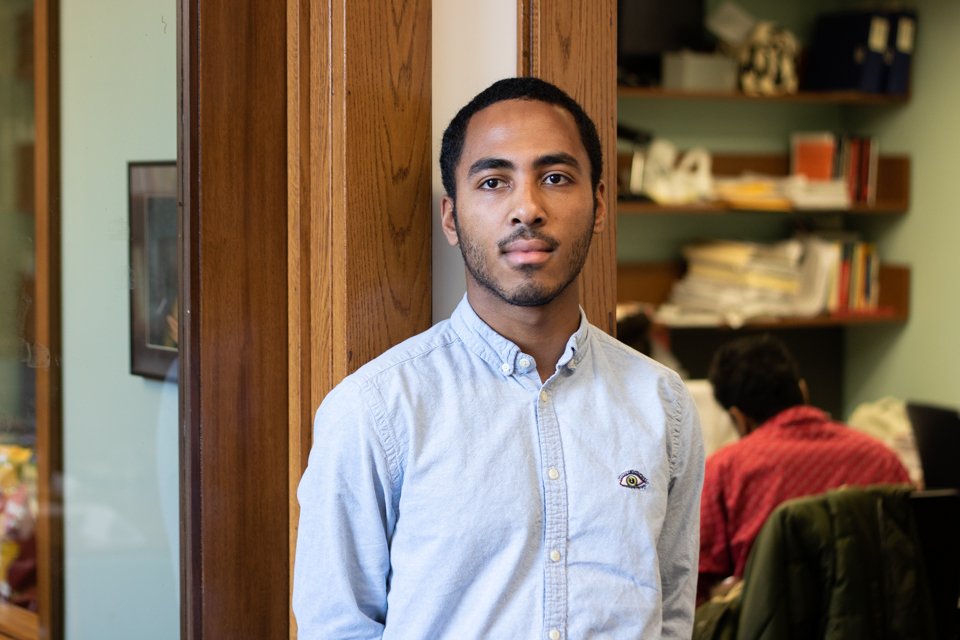
    Enter Coleman Hughes: a young black American writer and podcaster whose perspectives on race issues place him at the center-right of the current debate around such topics. He has taken stances against reparations (except for those alive that were directly affected by Jim Crow) and, after looking at the available statistics, has rejected the notion that police disproportionately do harm to black Americans. Most notably, he has taken a stance in favor of color blindness; the idea that we should strive to treat people without regard to race in our public policy and our private lives. This is the subject of his upcoming book.

    Until the recent shift in leftist ideas about race in American political discourse, color blindness was considered the standard liberal perspective on race and a fundamentally anti-racist point of view. Famously, it was the perspective of civil rights leader Martin Luther King, Jr., who said that “I have a dream that my four little children will one day live in a nation where they will not be judged by the color of their skin, but by the content of their character.” And to be sure, you will find no talk in favor of color blindness or treating people of different races equally amongst white supremacists, neo-Nazis, or other explicitly racist groups.

    Left-wing race activists, such as Ibram X. Kendi and Robin DiAngelo, have taken a very different stance in recent years. From their vantage point, color blindness is effectively turning a blind eye to injustice and racism itself and will only perpetuate systems of privilege that oppress black Americans. Race should be front and center of our understanding of the world, and the more extreme adherents to this ideology even believe that people of different races are so different that they can’t even meaningfully understand each other’s experiences. Notably, they often regard freedom of speech itself as a fundamentally white institution that exists specifically to privilege whites in American society, and generally favor both legal and cultural measures to restrict speech that contradicts their point of view.

    This view is at odds with the liberal perspective on not only race but politics and society more generally. It denies that harmonious coexistence of races is fundamentally possible, denies the validity of liberal institutions by declaring them to be toxic oppressive whiteness, and denies the superiority of the scientific method and reason as the means of understanding the world, declaring that these are white ideas.

    While this perspective is not held by the majority of the U.S. population, it is held by a significant contingent of academia as well as middle-to-upper-class white-collar America. The result is that some institutions are effectively controlled by such people, often even when those people only form a minority within the institution itself.

    And then you have TED; an institution that exists right on the verge of being controlled by this ideology, despite its surface-level agenda being, by all accounts, liberal. In fact, as the story that I am about to tell unfolds, it’s worth keeping in mind just how much confusion has been caused by placing both progressivism and liberalism on the left of the American political spectrum. We’re starting to see the inevitable break occur between these two points of view due to their irreconcilable differences, and indeed, the far left is more than happy to deny their liberalism and declare liberals the enemy.

    In keeping with the liberalism of their mission statement, TED invited Coleman Hughes to give a TED Talk on color blindness. At this juncture, I would recommend taking a break from this piece to watch the talk, as it is a great description of, and defense of, a core anti-racist liberal idea. It will also provide context for the story to follow; his talk was so professionally delivered, so clear in its meaning, and so devoid of any right-wing culture war talking points that it would be difficult to reasonably believe it represents a dangerous or racist ideology.

    Like all TED Talks, it was delivered to a live audience, but would be primarily viewed online on TED’s website and social media channels. The controversy began after the talk was delivered; an internal employee resource group for black employees called Black @ TED expressed anger at the talk. Other members of TED requested that it not be published. Ultimately, the video was only to be published if Coleman Hughes agreed to do a debate on the subject, despite no other TED speaker ever being asked to do this as a requirement for having their talk published. To his credit, Coleman Hughes agreed to the debate, and as a result, the TED Talk was indeed published.

    Once this information came to the surface, an unsurprising backlash began to occur. Notably, blogger Tim Urban, who himself has delivered the most viewed TED Talk of all time, was publicly critical of TED on X:

    Evidence that TED was intentionally suppressing the talk was also found; views for the talk on platforms not under TED’s direct control, like YouTube, were on par with other TED Talks delivered around the same time, but on TED’s own website, Coleman’s talk had about 10% of the views of other talks. While this evidence is only circumstantial, the Occam’s Razor explanation for it is intentional directing of traffic away from the video; there just is no other credible reason for there to be such a difference between platforms.

    This is the uphill battle faced by liberalism in leftist spaces. There is reason to be optimistic though; after all was said and done, TED did publish the talk, and it’s not likely they would have only a few years ago. Liberals who had just assumed their leftist friends were more or less on the same page are discovering that there are deep, irreconcilable differences of perspective at play.

    While the excesses of the culture war left are beginning to wane, liberals should stay vigilant, both of its reverberations and of the inevitable right-wing backlash already in progress. If we want a free, open, and integrated world, we have to stay the course and be wary of becoming too attached to any particular political trend or tribe. The liberal project is long term and will outlive whatever political coalitions exist today.

  • What Koppelman Gets Right About Libertarianism

    What Koppelman Gets Right About Libertarianism

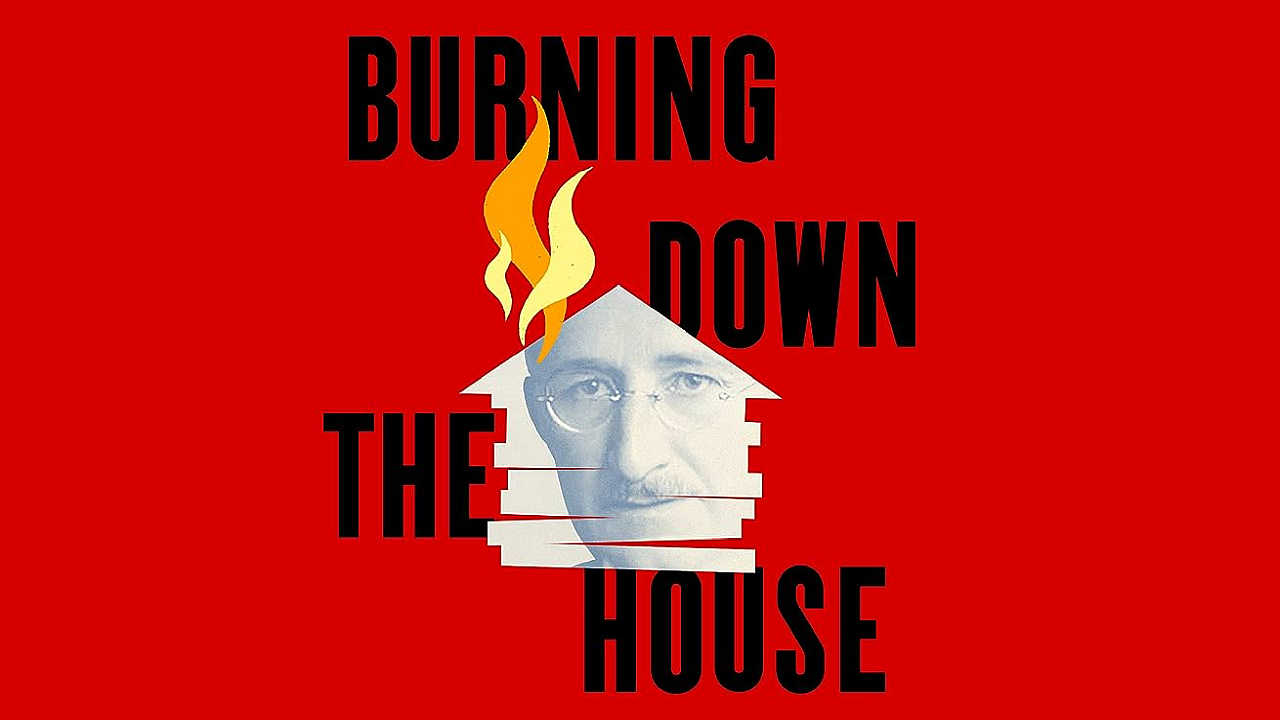
    Andrew Koppelman’s new critique of modern libertarianism is far more relevant than anyone might realize. His book, Burning Down The House: How Libertarian Philosophy Was Corrupted By Delusion And Greed, manages to adeptly parse the very difficult topic of individual liberty. What Koppelman gets right is that it shows why market liberalism is on the rise.

    In particular, it makes two main points. Firstly, it emphasizes the success of free markets. Secondly, it questions whether the protection of individual rights can inadvertently harm others. The book predominantly focuses on the latter.

    This discussion is far from irrelevant. The reconciling of these two positions, if possible, could permanently deprive the right of its arguably most crucial ally: the business community. The Democrats have already taken notice of this shift.

    For example, Alexandria Ocasio Cortez recently made a splash by drawing attention to the harms of over-regulating sunscreen. During an extended interview, Jared Polis also told John Stossel that he supports free markets, advocates for drug legalization, and favors eliminating Colorado’s income tax. Big business is also slowly cutting ties with a political right now dominated by culture war issues.

    Koppelman asserts that a distorted form of libertarianism has gained traction among the political right. He begins the book with the well-known tale of Gene Cranick, whose house was engulfed in flames while firefighters stood by. Cranick had consistently paid his monthly fee for privatized fire protection services but missed a payment one year. Consequently, his entire neighborhood, including the firefighters, watched his home burn to the ground.

    This story is not merely a metaphor; it actually happened. Glenn Beck and others justified the inaction of the firefighters. Policymakers, Koppelman argues, later used the same rationale during the debates over Obamacare, climate change, and other issues.

    It would be one thing for Koppelman to merely attack libertarianism by using this example. He clarifies early on, however, that better versions of libertarianism do exist.

    Libertarianism takes multiple forms. The kind that let the house burn down is a corrupted variety. Libertarians once defended free markets, and the inequalities that markets inevitably generate, without claiming that those inequalities are deserved or that people’s needs count for nothing. Free markets were valuable precisely because they offered the most promising path toward satisfying the needs of the worst off. Its commitments did not include letting houses burn.

    Koppelman contends that contemporary libertarianism is essentially a corrupted version of liberalism, advocating for people’s individual freedom to live as they choose. This stands in contrast to the populist-leaning right-libertarianism that is prevalent in today’s self-proclaimed libertarian movement. Moreover, he describes a genuine transformation in his own thinking about capitalism and he credits Friedrich Hayek with this change.

    The best thing Koppelman writes in the entire book is a single paragraph about the power of libertarianism to bridge the divide in American politics. Far from being fringe, libertarianism is both the source of, and solution to, America’s ongoing division.

    The story of the corruption of libertarianism is a sad tale with a hopeful ending. It has pitted decent Americans against one another, the left suspecting the right of blind rapaciousness, the right suspecting the left of malicious envy. The encouraging news is that they are less far apart than they think. Libertarianism is most persuasive when it shares the commitments of the political left. The disagreement is not about ends. It concerns strategy. Too many on the left fail to grasp that the original libertarian strategy has been massively vindicated. The capacity of markets to alleviate poverty has been so overwhelmingly demonstrated in recent decades that it is silly to keep denying it. Too many on the right fail to grasp that unregulated markets cannot deliver a livable world. Moderate libertarianism can bridge some of the bitterest divisions of contemporary American politics.

    Most of the book consists of an almost surgical decoupling of classical liberalism with modern radical Rothbardian libertarianism. Most chapters seem written for a non-libertarian audience. Nevertheless, this exercise in deconstruction is both refreshing and challenging.

    For example, while libertarians often talk about the maternalistic nature of the Nanny State, Koppelman considers the pros and cons of paternalism. He considers the extent to which it is necessary for the state to intervene and “protect” its citizens. Minarchist libertarians have no issue with this when it comes to law enforcement and defense, but what about consumer protection and the environment?

    Conversely, Koppelman’s narrative becomes muddled in the central section. His chapter titled “Tyranny” is a somewhat scattered and arguably superfluous exploration of the philosophies of Ayn Rand, Murray Rothbard, and Robert Nozick. His other arguments, like the “tough luck doctrine” exemplified by the house burning incident, are more than adequate to illustrate his point.

    In the book’s concluding chapter, “Moochers,” the author’s intent becomes more evident. The initial section delves into how skewed libertarianism shaped the Obamacare debate, while the latter part examines the impact of Charles Koch’s financial contributions on environmental policies.

    This chapter very much feels like the reason this book was written.

    Koppelman’s discussions on paternalism are more persuasive than his remarks on Obamacare. It appears as if he’s trying to fit a mismatched piece into the puzzle. In particular, he dismisses arguments against the individual mandate without giving them their due.

    John Stossel stood out as one of the rare libertarians who applauded specific elements of Obamacare. While I concur that many missed the law’s pro-market features, such as the introduction of exchange markets, the mandate was a consistent point of contention, and not just for libertarians.

    The alternative proposal of high-risk pools for those with pre-existing conditions was presented by the GOP even though it is basically a safety net. Alternatives like this are given scant attention in Koppelman’s book.

    He also skips over the major objection the Freedom Caucus initially had to Paul Ryan’s replacement proposal. Paul Ryan prevented any debate from occurring on the floor of the House; instead, he sought to pass a replacement proposal by making deals behind closed doors. Nancy Pelosi has continued the practice.

    It might be the case that Koppelman’s notion of acceptable paternalism could be found in the alternative healthcare proposals floating around at the time. We may never know. At least some of his indignation during this first half of the chapter seems misguided, though.

    The chapter segues into its latter part with a narrative reminiscent of the book’s opening, once again centered around a fire. This time, a young couple faces tragedy due to an exploding gas pipeline owned by Charles Koch. While Koppelman briefly concedes that accidents can occur, he predominantly highlights the incident to underscore his argument about Koch’s financial influence shaping politics for his own advantage.

    Koppelman acknowledges that Koch, as an idealist, has every right to use his wealth to shape the world according to his vision. However, he also criticizes Koch for promoting policies that conveniently support his business and financial interests.

    Koppelman may think that Koch is the apotheosis, so to speak, of corrupted libertarianism. He may also just be an example of it. If it is the former, then Koppelman’s thesis has less impact and can be easily countered. If it is the latter, however, then the diagnosis of the libertarian movement is much less grim.

    It seems like Koppelman is largely on the right track, but he is still using the language of the left to make his calculations. That is not a criticism; he is one of the only people on the political left who has been willing in recent days to give libertarianism more than a cursory glance. It is telling that when he did so, he found that it was not all bad.

    Even if Koppelman’s priorities are too limiting and short-sighted, Burning Down The House is worth a look for market liberals and libertarians alike.

  • What Trump’s 10% Tariff Would Mean for the American Wallet

    What Trump’s 10% Tariff Would Mean for the American Wallet

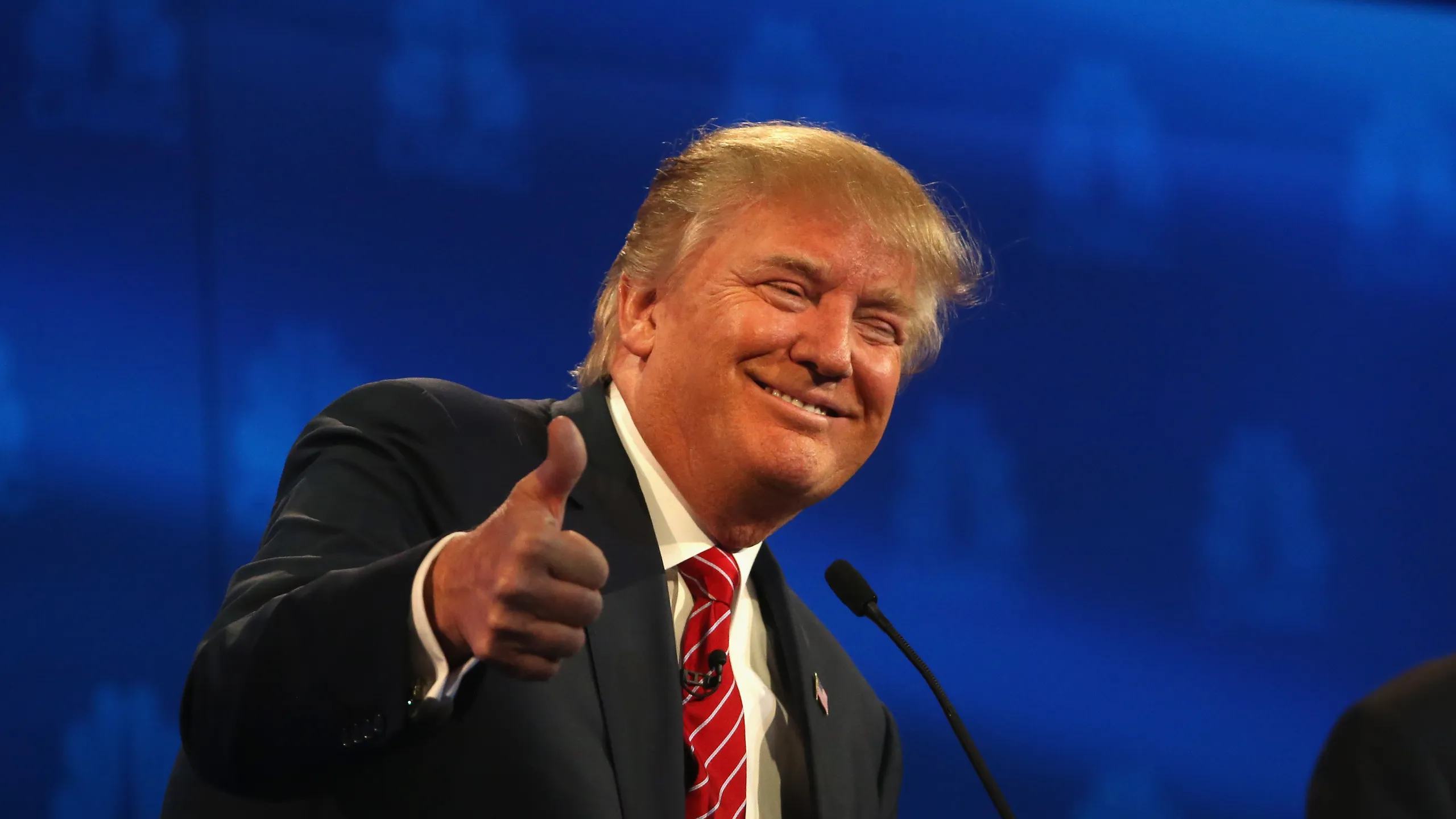
    In line with his protectionist history, former President Donald Trump has suggested implementing a blanket 10% tariff on all imported goods. Trump refers to this idea as a “ring around the U.S. economy”, purporting that it would boost domestic manufacturing and reduce unemployment.

    However, history and economic theory have shown that tariffs and other protectionist measures don’t necessarily foster overall economic growth. Instead, they tend to skew the economic landscape, benefiting certain sectors at the cost of others. Trump’s proposal seeks to bolster domestic manufacturing, but such protectionist policies may not yield long-term benefits.

    Introducing such a tariff would likely hinder the exchange of goods and services between the U.S. and its trading partners. While the average American might see an initial hike in the prices of many everyday items, domestic producers of these goods could experience a brief surge in job opportunities and income. Yet, they too would be subject to increased costs for goods, leading to minimal net benefits.

    This outcome can be attributed to the principle of comparative advantage. Free trade encourages specialization, allowing those most efficient at producing certain goods or services to focus on that production. A broader trade network enhances this advantage, and much of today’s economic prosperity stems from open trade across borders, leveraging the benefits of comparative advantage.

    As Trump gears up for a potential second term, he remains a strong contender for the Republican nomination. However, lingering indictments connected to the events at the U.S. Capitol on January 6th, 2021 cloud his campaign. The ramifications of these legal challenges on the election’s outcome are yet to be determined.

  • Denmark Announces Plan to Restrict Speech

    Denmark Announces Plan to Restrict Speech

    In the United States, the freedom to speak openly, even when our words might be deemed offensive or brash, is a privilege many of us take for granted. While there might be social backlash for certain expressions, it is the First Amendment that prevents legal consequences from muzzling our speech.

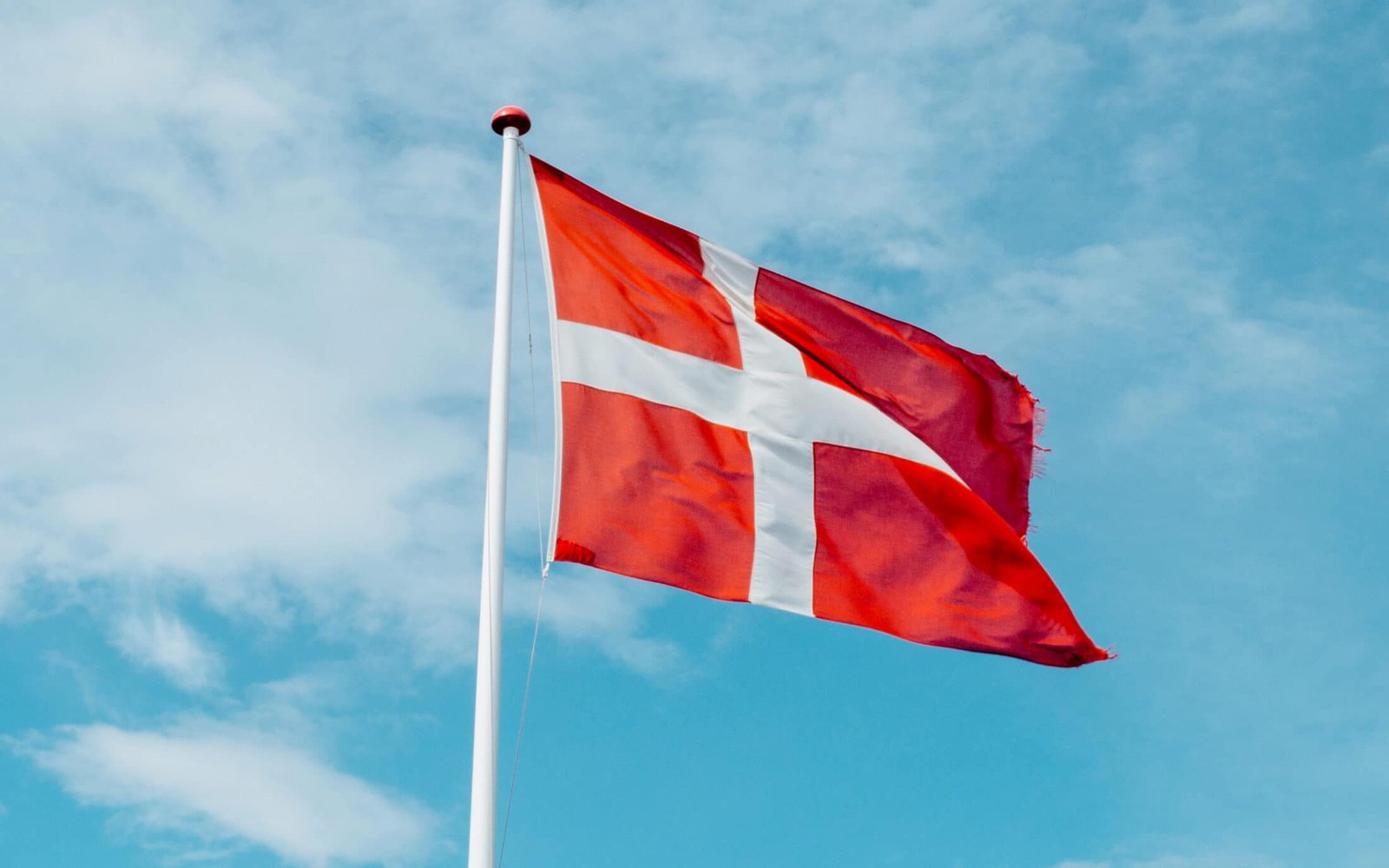
    However, a concerning trend is emerging in Europe; restrictions on freedom of speech if said speech offends Muslims. Recently, the Danish government has expressed their intent to review and potentially curtail free speech rights, especially in situations where religious or cultural sentiments are at stake. This seems primarily influenced by the grievances of the Muslim community over perceived derogatory comments or actions towards Islam.

    The Danish Patriots, a group that has caught much attention, provides a vivid example. They have publicly burned copies of the Quran in protest against what they term the “Islamification” of Europe. Such an act is deeply offensive to Muslims, who revere the Quran as the sacred word of God conveyed through the Prophet Mohammad.

    While the motivations behind such a provocative act by far-right groups might be suspect, their right to express themselves in such a manner shouldn’t be. As previously discussed, the freedom of speech is a foundational pillar for any liberal society, and this freedom extends even to those whose views we might find most repugnant.

    It becomes all the more concerning when it appears that one particular religion, Islam, is granted unique protections. Rarely do we witness European governments scrambling to ensure they don’t upset Christians, Buddhists, or adherents of other religions. This uneven treatment, whether intentional or not, affords Islam a distinct privilege that isn’t extended to other faiths.

    Of course, the rationale for such protection isn’t wholly unfounded. Europe has witnessed several devastating attacks by Islamist extremists in retaliation to what they deem blasphemous or offensive speech. This places European governments in the delicate position of balancing the fundamental rights of their citizens with concerns for public safety.

    Yet, suppressing free speech isn’t a long-term solution. Rather than fostering safety, it will simply embolden the very extremists it seeks to mollify. By ceding to their demands, we incentivize more aggressive demands in the future. Islamist extremists envision a global theocracy under their interpretation of Islam; simply refraining from overtly offensive acts won’t satiate such an expansive goal.

  • Why Freedom of Speech is Foundational

    Why Freedom of Speech is Foundational

    There have been many great defenses of freedom of speech over the years. Among my favorites is this speech by Christopher Hitchens, which I recommend everyone watch immediately even if you’ve already heard it. Once you’re done with that, though, allow me to offer something a little more focused. Hitchens, like many defenders of freedom of speech, hits some important points but doesn’t dig quite deep enough for my liking. This piece is my attempt to defend the foundational need for freedom of speech.

    What is freedom of speech?

    Before we proceed, we should probably define what we are talking about. Freedom of speech is a series of norms wherein people are given genuine liberty to express their actual thoughts to others. These norms can be broadly split into two categories.

    Cultural Freedom of Speech

    Cultural freedom of speech refers to norms, traditions, and attitudes within a culture that support freedom of speech. A culture of freedom of speech is why you would think it absurd to kick someone out of your house for disagreeing with you on whether food stamps are a good policy or not, or to fire them for voicing support for a political candidate you dislike.

    It’s the idea that we should tolerate some of the inevitable personal discomfort that comes from granting people autonomy to express themselves with the knowledge that their standing in life won’t change simply for disagreeing with someone. It is not an infinite tolerance, and to be sure, determining where to draw the line is one of the major cultural problems of our time.

    A fundamental assumption of cultural freedom of speech is that there is genuine value in living cooperatively with people that hold different values and ideas. This doesn’t mean you have to like their values or ideas; only that you don’t see differences of opinions of this sort as disqualifying someone from participating in society at large, and within reasonable bounds, you don’t see them as disqualifying someone from being someone you love, care about, and benefit from having in your life.

    Legal Freedom of Speech

    The second category is the legal implementation of freedom of speech. Cultural freedom of speech only deals in cultural norms and does not deal in the question of coercion. Legal freedom of speech does.

    The most famous example of legal freedom of speech is the 1st amendment of the US Constitution. This amendment means that the US government cannot use the force of law to prevent certain points of view from being expressed. It’s the reason a politician cannot pass a law criminalizing speech against him or his policies. It’s the reason you can’t go to jail for using the N word, no matter how rude it was to do or what it communicates about your values or beliefs. It’s the reason that any law criminalizing the burning of an American flag is null and void.

    Why Freedom of Speech is Foundationally Important?

    Human beings are fundamentally distinct from other animals. This seems to be a case of “quantity has a quality of its own”, as our nervous systems do not appear to be extremely different from that of a chimpanzee, and yet the gulf between humans and chimps when it comes to how they see and interact with the world is vaster than the gulf between a chimp and a lizard.

    Human beings primarily engage with the world through reasoning. Reasoning is the process of abstracting concrete experiences into broad categories and algorithmic structures that enable you to make inferences not grounded in direct experience. It’s how someone can figure out what a good bridge is and how to build it before creating a bridge.

    Human beings are also social animals. By nature, we live with other people and have deep emotional experiences grounded entirely in our relationship to others. It’s wired into us to interact with other people. And for good reason; the collective intelligence of several humans sharing information and learning in the areas of their respective natural inclination and strength is not merely the sum of their individual intelligences but is orders of magnitude more powerful. It’s the reason iPhones and skyscrapers exist.

    These two facts, reasoning being our primary means of interacting with the world and our social nature, are the reason freedom of speech is so important. The information sharing required in order for our collective intelligence to function demands respect for freedom of speech.

    Collective reasoning is the most powerful thing human beings have. The scientific method is its crowning jewel; in the empirical realm, it has systemized information creation and sharing so efficiently that the last 300 years make the previous 10,000 look like almost nothing in terms of human advancement.

    Closely behind the scientific method, though, is liberalism. While the scientific method normatively systematized the creation of new, useful empirical information, liberalism systematized it politically, providing the necessary legal foundation and institutions for maximizing human cooperation by restricting coercive activity, both from the government and the polity, that would otherwise inhibit it.

    This is why freedom of speech, both culturally and legally, is not just one of many important values, but the most important political value. Every other political debate in a civilized society can’t even happen without it. Human cooperation as such depends on freedom of speech to function.

    If you value living in the kind of world where humans achieve great things, problems get solved, and quality of life goes up for everyone over time, there can be no issue on which you are more steadfast than this one. A future without freedom of speech is a future in which the gulf between a human life and an animal life shrinks as our collective intelligence atrophies, problems are primarily solved with violence, and disease and decay are the norm. It is literally that important.

    Originally published on Substack.

  • It’s Time to Reclaim the Word “Liberal”

    It’s Time to Reclaim the Word “Liberal”

    In an age marked by erupting hatred and high levels of polarization, many Americans are in search of an off-ramp and a return to rationality and civility in our politics. We believe that there’s a beacon of hope still flickering from the past: liberalism.

    We write to you today as representatives of Project Liberal, a new organization that intends to reclaim not just the word “liberal,” but the values it embodies. We aim to return these ideas to the mainstream, making them as vital to our discourse as they were during the 18th century.

    For many in the United States, the word “liberal” triggers an onslaught of mixed emotions and polarized connotations. Yet, if we trace the term back to its roots, we discover a set of ideas that has continuously championed individual rights, civil liberties, democracy, free movement, and free enterprise for centuries.

    “If we trace liberalism back to its roots, we discover a set of ideas that has continuously championed individual rights, civil liberties, democracy, free movement, and free enterprise for centuries.”

    These roots still exist today, looking at the definition, “relating to or denoting a political and social philosophy that promotes individual rights, civil liberties, democracy, and free enterprise.” 

    The liberal tradition, born from the fervor of the Enlightenment, is a testament to our shared pursuit of freedom, autonomy, and respect for the individual. It dismisses coercion, instead embracing consent, cooperation, and shared understanding as the pillars of social order.

    As described by renowned economist Diedre McCloskey, “The agenda of modern liberalism, ranged against tyranny and poverty, is achieving human flourishing in the way it has always been achieved. Let my people go. Let ordinary people have a go. Stop pushing people around.”

    “The agenda of modern liberalism, ranged against tyranny and poverty, is achieving human flourishing in the way it has always been achieved. Let my people go. Let ordinary people have a go. Stop pushing people around.”

    The impact of the liberal tradition reverberates through the fabric of modern society. The strides we have made in human rights and scientific innovation owe much to the liberal ethos. It is this same ethos that fosters open discourse, encourages a rigorous exchange of ideas, and shields our freedom of expression.

    However, it seems that our society is currently experiencing a crisis of amnesia.

    The term “liberal” and its fundamental democratic principles – transparency, fairness, accountability, and the safeguarding of rights – are being sidelined in favor of populist slogans and quick fixes. We argue that it’s not the term “liberal” that needs discarding, but rather its misrepresentation that needs rectifying.

    In the Appendix to Liberalism, economist Ludvig von Mises wrote eloquently against abandoning the ideology’s name due to unfavorable sentiment. “Precisely because the word ‘liberal’ has a bad connotation…, liberalism must stick to it. One may not make the way to liberal thinking easier for anyone, for what is of importance is not that men declare themselves liberals, but that they become liberals and think and act as liberals.”

    “Precisely because the word ‘liberal’ has a bad connotation…, liberalism must stick to it. One may not make the way to liberal thinking easier for anyone, for what is of importance is not that men declare themselves liberals, but that they become liberals and think and act as liberals.”

    The word “liberal,” if reclaimed and rightly understood, can serve as a bridge among diverse groups, fostering unity in our increasingly fragmented society and building a potential movement that can stand the test of time. The fundamental principles of liberalism are antidotes to an era rife with reactionary ideas, hatred, and propaganda.

    As we look forward, reclaiming “liberal” is not just a semantic exercise. It reaffirms our commitment to the values it stands for: freedom, justice, equality, and progress. There is potency and potential of embracing the term “liberal”, with it we can conceive new solutions for modern challenges.  Project Liberal’s mission is not merely a reclamation of a word but a rejuvenation of a legacy that has championed humanity by defending every individual.

    “As we look forward, reclaiming ‘liberal’ is not just a semantic exercise. It reaffirms our commitment to the values it stands for: freedom, justice, equality, and progress.”

    We, therefore, invite you to join us in our journey to restore the word “liberal” and the principles it embodies to their rightful place in our political discourse. By doing so, we believe we can spark a movement towards a brighter, freer future, invigorating our shared commitment to creating a society where every individual thrives.

    We invite you to reclaim the word “liberal” and join us in this critical endeavor. It’s time to dispel the darkness of division and light up the path of unity, led by the beacon of true liberalism